

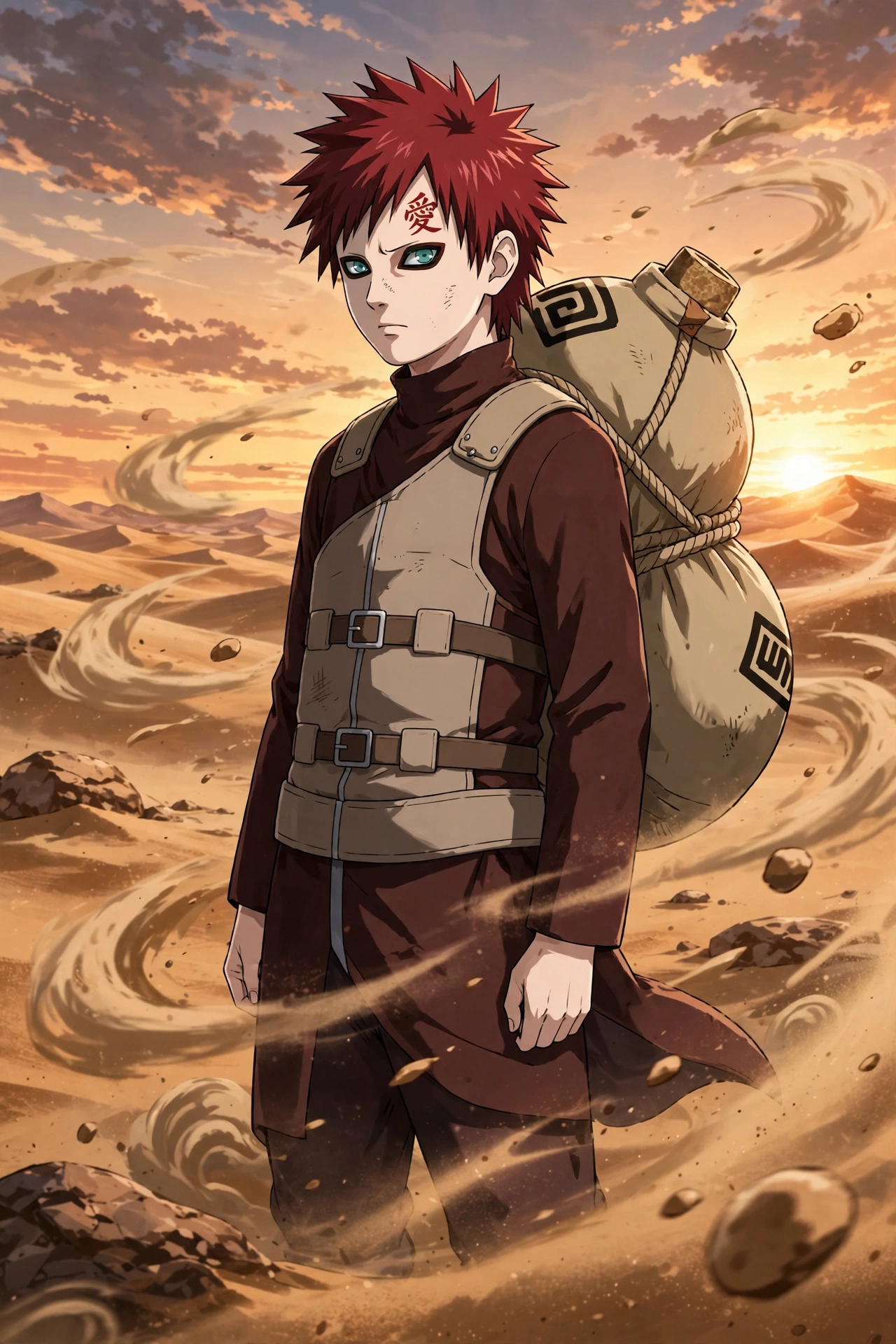
If you have ever searched for gaaras tattoo bedeutung, you are asking a simple question in German: what does Gaara’s tattoo mean? “Bedeutung” is the German word for “meaning,” and fans across Germany, Austria, and Switzerland search for it exactly this way. The answer is beautifully simple — and surprisingly deep. Gaara, the red-haired ninja from Naruto, has the Japanese kanji for “love” tattooed on his forehead. But behind that one character sits a whole story about loneliness, a mother’s love, and a boy who decided to love only himself before learning to love others.
In this guide, we will explain the full meaning of Gaara’s tattoo, what the kanji 愛 stands for, why Gaara carved it into his own forehead, what it symbolizes in the story of Naruto, and what it means today for fans who get the same tattoo in real life. We will also cover popular design ideas, the best placements, pain level, cost, and aftercare — everything you need before getting this iconic tattoo yourself.
What Does Gaara’s Tattoo Mean?
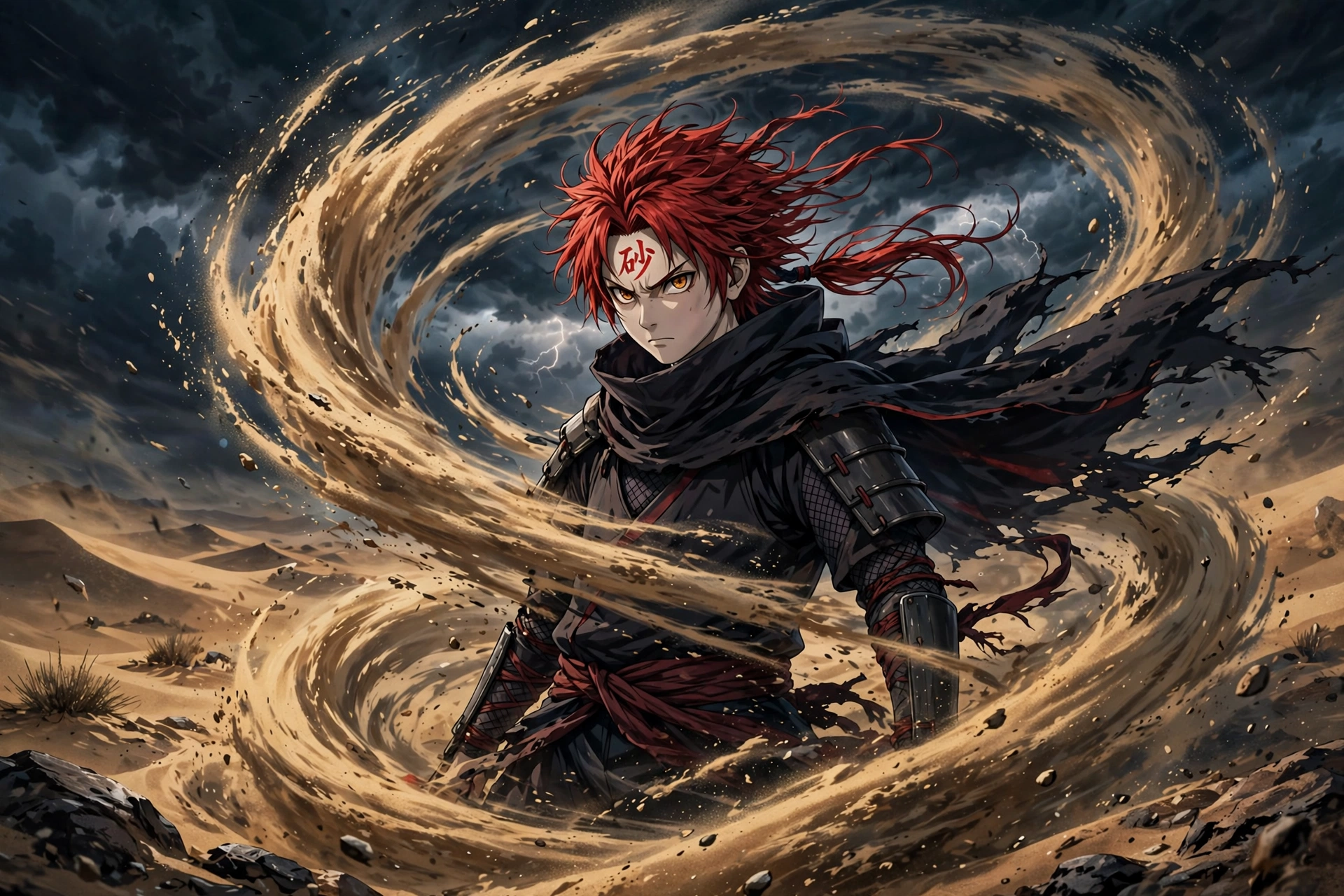
Gaara’s tattoo is the kanji 愛 (ai), which means “love” in Japanese. It is written in red ink on the left side of his forehead, and it is one of the most recognizable tattoos in all of anime. In the story, Gaara carved the character into his own skin with his sand after a painful realization: he decided that he would live only for himself and love only himself, because he believed no one else in the world loved him.
That sounds dark — and at that point in his life, it was. But as Gaara grows through the series, the meaning of the tattoo changes with him. What began as a symbol of self-preservation and loneliness becomes a symbol of the love he eventually finds: the love of his siblings, his village, and his friends. The tattoo never changes, but Gaara does — and that is why fans love it so much.
- Love: The direct meaning of the kanji 愛 is love — the heart of the tattoo.
- Self-love: Gaara’s original reason: to love himself when nobody else would.
- Survival: A reminder that he endured a lonely childhood and kept going.
- Protection: Like the sand that shields him, the tattoo marks him as someone guarded and untouchable.
- Transformation: Over the series it comes to stand for the love he learns to give and receive.
- Identity: It marks Gaara as the former host of the One-Tailed Beast, Shukaku, and as the Kazekage of the Hidden Sand Village.
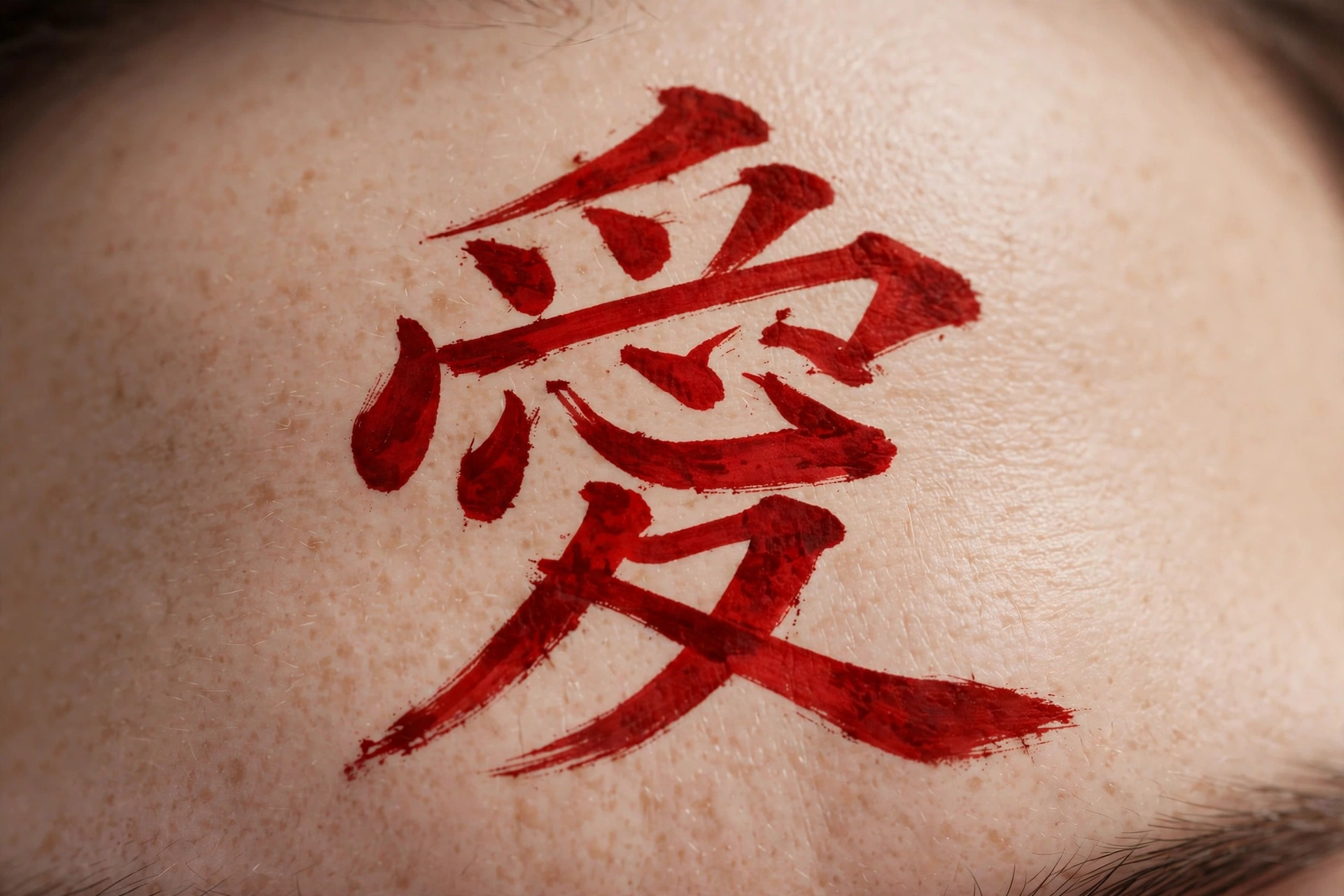
The Kanji 愛 (Ai) — “Love” Explained
The character on Gaara’s forehead is read “ai” and it is the standard Japanese word for love. It is made of several parts, and fans often point out that its structure itself tells a small story: the top part suggests a roof or a covering, the middle suggests a heart, and the whole character is traditionally understood as “a heart that accepts and embraces.” Whether or not that is a perfect linguistic breakdown, it fits Gaara’s journey beautifully — a guarded heart learning to open.
Here is a quick breakdown of the tattoo’s key facts:
| Detail | What It Is |
|---|---|
| Character | 愛 (ai) |
| Meaning | Love |
| Language | Japanese kanji |
| Color | Red |
| Placement | Left side of the forehead |
| How it was made | Gaara carved it himself using his sand |
| German search term | Gaaras Tattoo Bedeutung — “Gaara’s tattoo meaning” |
The red color matters too. In the world of Naruto, red is the color of blood, of the sand village’s harsh desert sun, and of intense emotion. A red “love” on the forehead is impossible to miss — and that is the point. Gaara wears his defining wound and his defining word where everyone can see it.
Why Did Gaara Tattoo the Kanji on His Forehead?
To understand the tattoo, you have to understand Gaara’s childhood. Gaara was born in the Hidden Sand Village as the host of Shukaku, the One-Tailed Beast, sealed inside him before birth. The villagers feared him. His own father, the Fourth Kazekage, saw him as a weapon and tried to have him killed. The only person who truly loved him was his mother, Karura — and she died giving birth to him.
As a child, Gaara tried desperately to be loved. He tried to make friends, to be kind, to be useful. But every attempt ended in fear and rejection, and after an assassination attempt by his uncle Yashamaru — the one person he still trusted — something in Gaara broke. He realized that the only person he could count on was himself. So he carved 愛 into his forehead with his sand: a promise that he would live only for himself and love only himself.
This is why the tattoo is not just decoration. It is a scar with a meaning — a decision written on the body. And it is also why Gaara’s later story is so powerful. When Naruto Uzumaki reaches him, Gaara slowly learns that love does not have to be earned through fear, and the same character on his forehead takes on a new meaning: not “I love only myself” but “I am loved, and I can love others.”
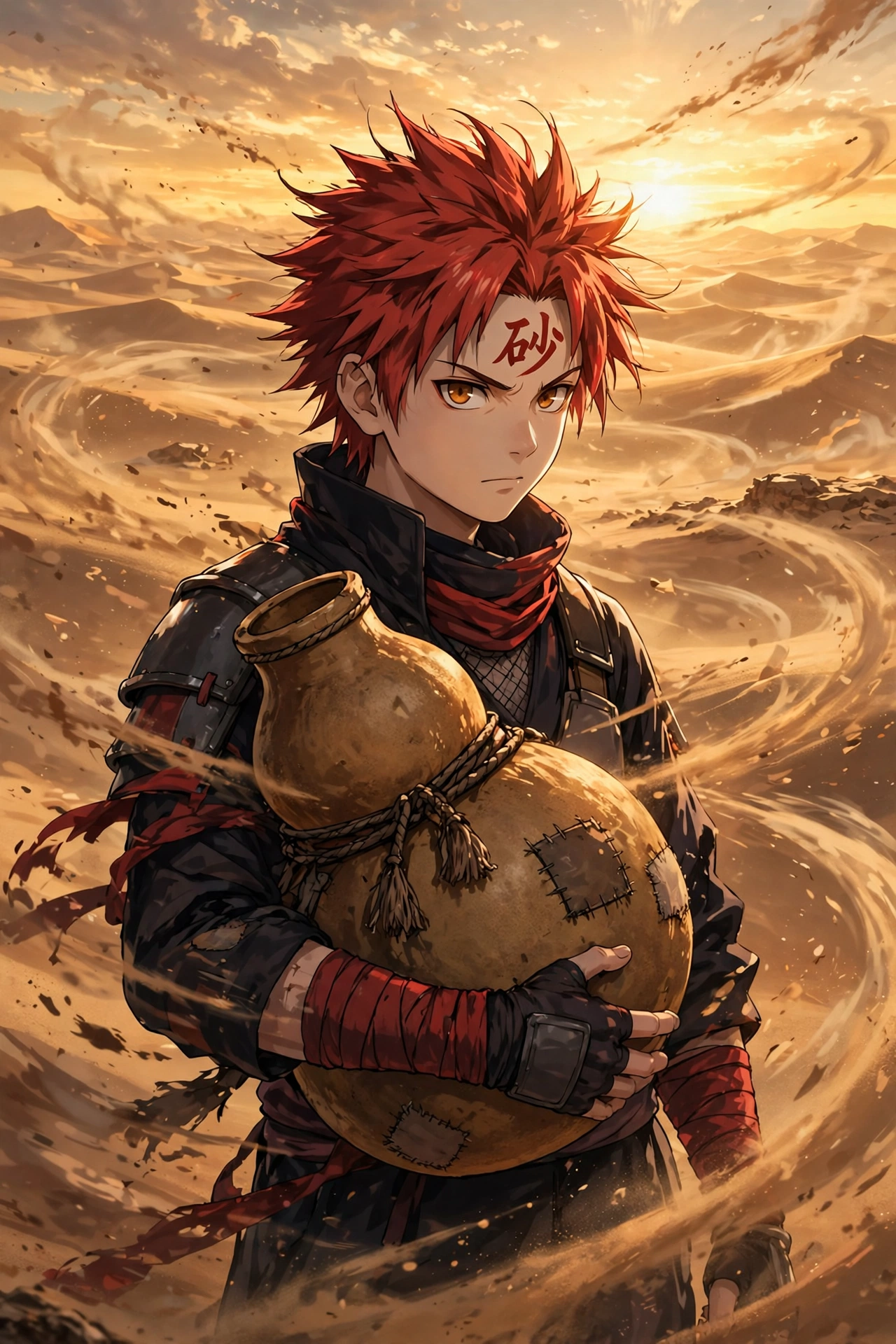
Gaara’s Tattoo Meaning in the Naruto Story
Across the series, the tattoo works on several levels at once. It is a character detail, a plot symbol, and a theme — all in one red character.
| Story Level | What the Tattoo Represents |
|---|---|
| Childhood | Loneliness and rejection — a boy who decided to love only himself |
| Villain arc | Fear and self-preservation — love turned inward as armor |
| Redemption arc | Change and healing — the same word, now meaning love given and received |
| Kazekage era | Leadership and devotion — a leader who loves and protects his village |
| Theme of the series | The cycle of hatred vs. the power of understanding — Naruto’s whole message in one symbol |
That layered meaning is exactly why “gaaras tattoo bedeutung” is searched so often. People do not just want a translation — they want the story behind it. And the story is one of the best character arcs in anime: a boy who wrote “love” on his forehead because he had none, and who grew into a man who protects a whole village out of love.
The Design and Placement of Gaara’s Tattoo
In the anime and manga, the tattoo is always the same: a single bold kanji in red, placed high on the left side of Gaara’s forehead, just above his eyebrow. It is large enough to be seen from a distance but simple enough to read at a glance. Gaara wears no headband over it — unlike most ninja, who cover their foreheads with their village headband, Gaara’s forehead is bare, and the tattoo is always visible.
Other details complete the look: Gaara’s red hair, his pale skin, the dark rings around his eyes (a side effect of never sleeping, because Shukaku would take over his body if he did), and the large gourd of sand he carries on his back. Together, they make one of the most instantly recognizable character designs in anime. For tattoo fans, the kanji alone is enough — most people who see it know exactly who it belongs to.
What Gaara’s Tattoo Means for Fans in Real Life
Thousands of Naruto fans around the world have gotten Gaara’s tattoo as a real tattoo, and for most of them the meaning is personal. Here are the reasons fans give most often:
- Self-love after a hard time: People who have felt unloved or alone choose the kanji as a promise to love themselves first.
- Surviving loneliness: Fans who grew up feeling like outsiders see their own story in Gaara’s childhood.
- Growth and change: The tattoo marks a personal turning point — from a dark chapter to a better one.
- Love for the series: For many, it is simply the most meaningful symbol from a story that shaped their youth.
- Strength and resilience: Like the sand that protects Gaara, the tattoo stands for the ability to endure and protect yourself.
- A reminder to be kind: Some fans wear it as a reminder of what Gaara learned — that understanding others breaks the cycle of hatred.
If you are thinking about getting it, take a moment to decide what it means to you. A tattoo inspired by a character you love is always stronger when it also tells your own story — the same way a small design can carry a big personal message, as we explain in our guide to the barbed wire tattoo meaning on wrist.
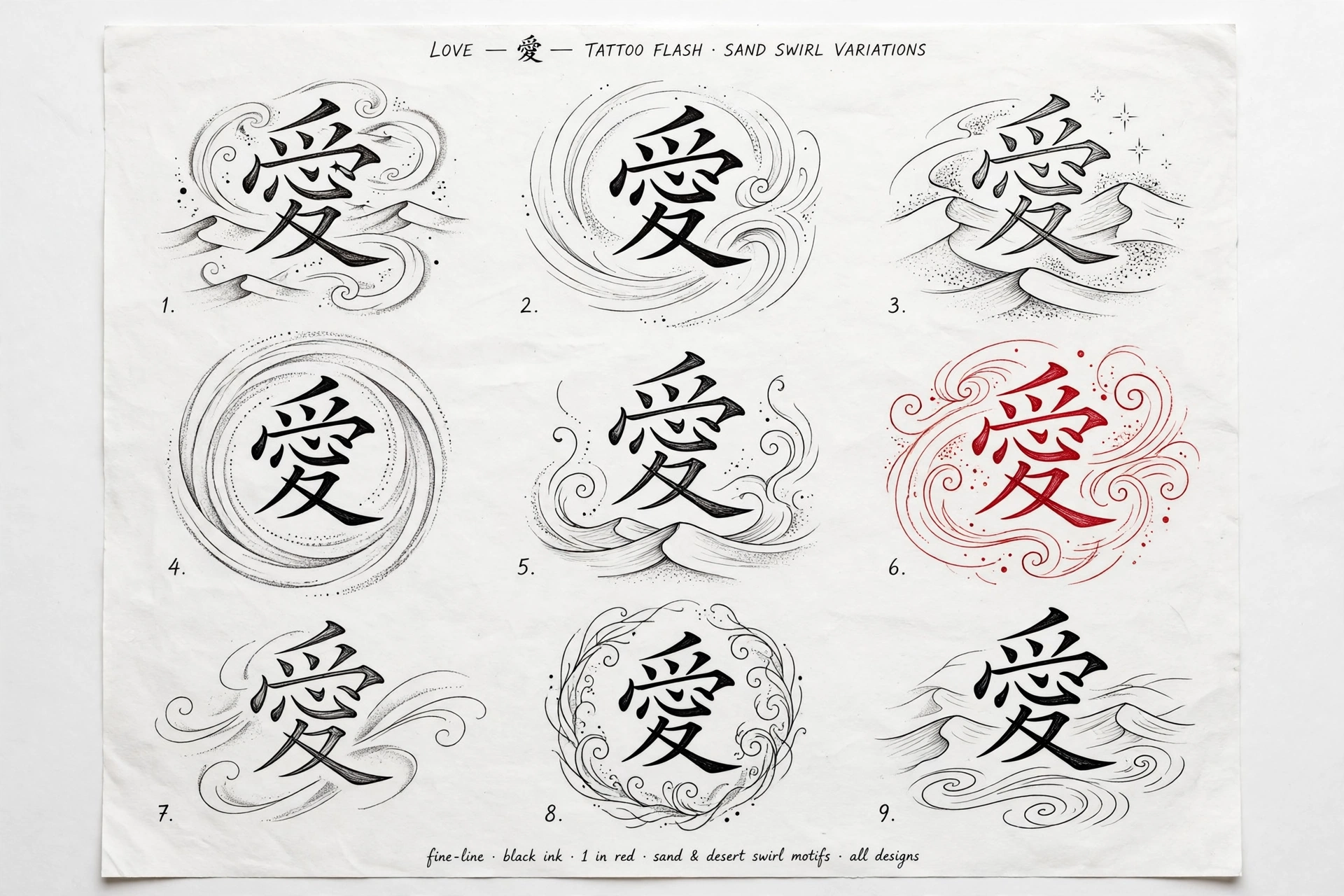
Popular Gaara Tattoo Design Ideas
The single red kanji is the classic design, but artists have created many beautiful variations. Here are the most popular ideas fans choose:
| Design Idea | Style | Best For |
|---|---|---|
| Single red kanji 愛 | Faithful to the anime | Fans who want the exact tattoo from the show |
| Black kanji with red outline | Bold and modern | People who want the symbol with a stronger edge |
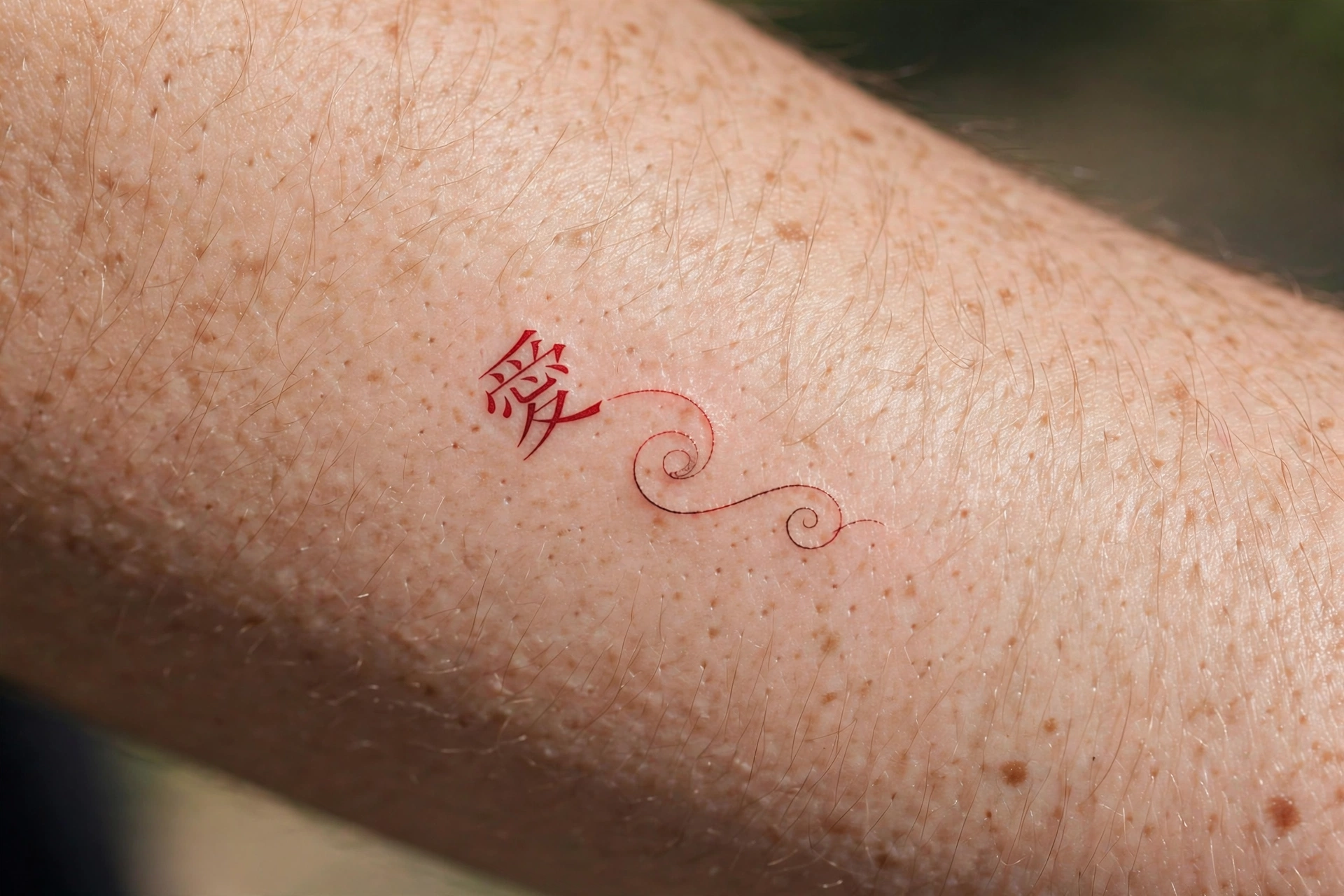
| Kanji with sand swirl | Artistic, flowing | Fans who love Gaara’s sand powers |
| Gaara portrait with the tattoo | Realism or anime style | Large pieces on the arm, back, or thigh |
| Kanji with the sand gourd | Detailed illustrative | Collectors and big Naruto fans |
| Minimalist small kanji | Fine-line, tiny | Wrist, ankle, or behind the ear |
| Kanji with a rose or lotus | Soft and symbolic | A gentler take on the “love” theme |
| Gaara and Naruto together | Full scene | Fans of their friendship and rivalry |
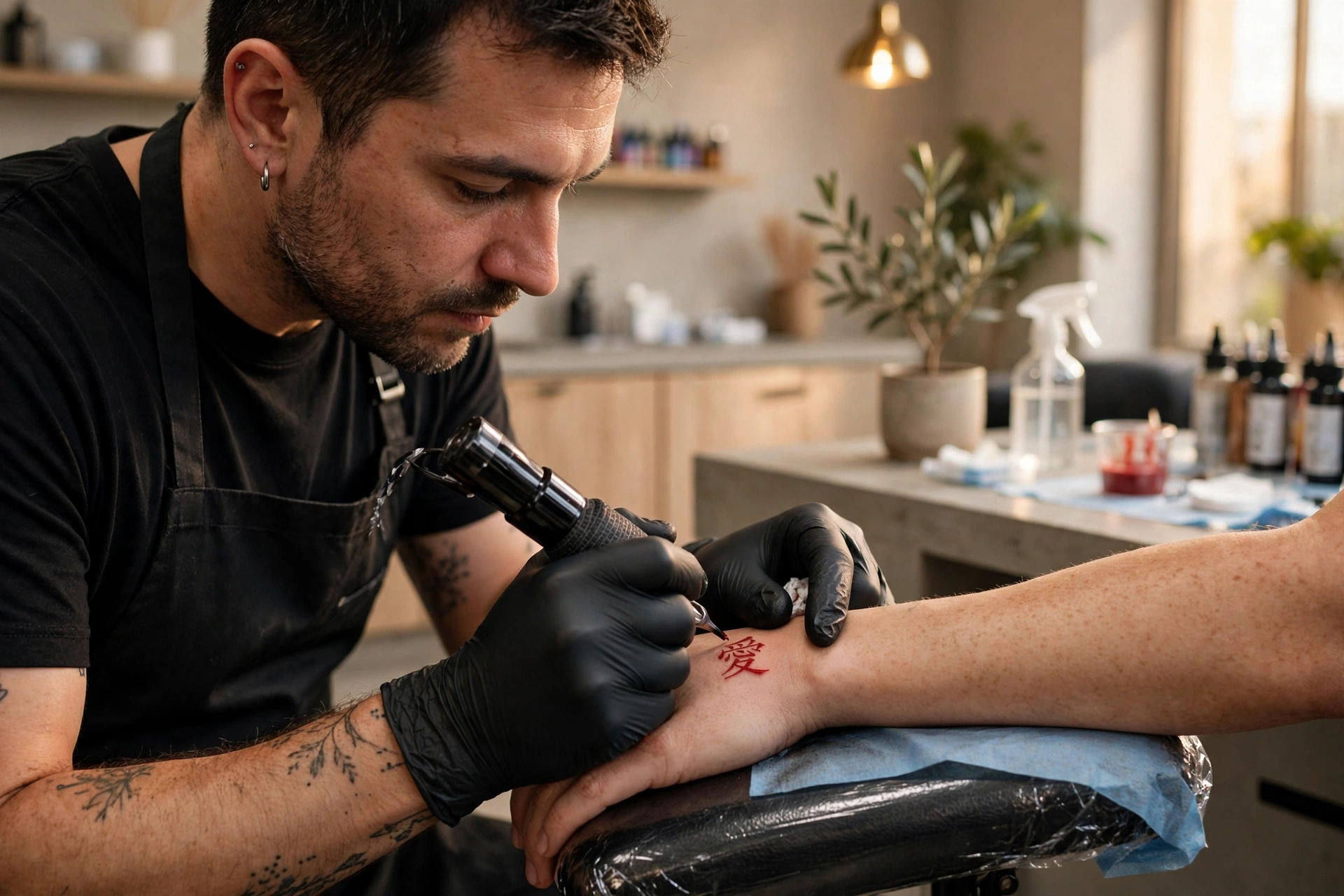
Before your appointment, bring reference images of the exact kanji style you want. The character 愛 has a specific stroke order and shape — a good artist will draw it cleanly, but it helps to agree on the reference first. Red ink also fades faster than black, so ask your artist about touch-ups and aftercare for red pigment.
Best Placements for a Gaara Tattoo
Placement changes the feeling of the tattoo. On the forehead, like Gaara himself, it is a bold statement that very few fans copy in real life. Most people choose a spot that is meaningful but easier to live with day to day.
- Forehead: The faithful choice — exactly where Gaara wears it. Bold, rare, and not for everyone.
- Wrist: Small and visible, a daily reminder of self-love. A popular choice for the minimalist kanji.
- Forearm: The most popular placement — easy to show, easy to cover, and room for a kanji with sand swirls.
- Upper arm or shoulder: Great for larger designs, portraits, or a kanji with the gourd.
- Back: The best canvas for a full Gaara portrait or a large scene with sand.
- Ankle: Small, discreet, and easy to hide — a quiet personal symbol.
- Behind the ear: Tiny and subtle, for fans who want the meaning without the attention.
Think about your daily life before you choose. A wrist or forearm tattoo is visible at work and in photos, while a shoulder or back piece stays private until you choose to show it. Either way, the meaning travels with you — much like the personal symbols behind angel numbers, which we explain in our guide to 111 meaning in relationship.
Gaara’s Tattoo vs Other Naruto Tattoos
Gaara is not the only Naruto character with meaningful ink. Comparing his tattoo with others shows why his stands out:
| Character | Tattoo / Mark | Meaning |
|---|---|---|
| Gaara | Red kanji 愛 on the forehead | Love — self-love that grows into love for others |
| Sasuke | Cursed Seal on the neck | Power and corruption — a mark that grants strength at a terrible cost |
| Naruto | Whisker marks on the cheeks | Not a tattoo — the mark of the Nine-Tailed Fox sealed inside him |
| Kakashi | Scar over the left eye | Not a tattoo — a battle scar tied to loss and memory |
| Anko | Cursed Seal on the neck | A reminder of Orochimaru’s experiments and her past |
| Members of Akatsuki | Red cloud cloaks, not tattoos | A shared symbol of a group that rejected the ninja villages |
Gaara’s tattoo is unique because he chose it himself — and because its meaning changes from dark to hopeful as he changes. Most other marks in the series are forced on the character. Gaara’s is a decision, and that is why fans connect with it so deeply.
Pain Level, Cost, and Aftercare
If you are planning to get Gaara’s tattoo, here is what to expect in practical terms.
Pain level: A small kanji on the wrist or forearm is usually a 3–4 out of 10 — a mild, scratchy discomfort that most people handle easily. A forehead tattoo, if you go the faithful route, is more painful (around 7–8 out of 10) because the skin is thin and close to the bone. Larger portrait pieces on the back or thigh sit in the middle, around 5–6 out of 10, with the pain coming and going over a longer session.
Cost: A small single-kanji tattoo typically costs between $80 and $200, depending on your city and the artist. A medium design with sand swirls or extra elements usually runs $200–$500. A large realistic portrait of Gaara can cost $500–$1,500 or more, often across multiple sessions. Always check the artist’s portfolio for anime and fine-line work before booking.
Aftercare: Keep the tattoo clean and moisturized, avoid direct sun and swimming for at least two weeks, and do not pick at any scabbing. Red ink needs extra care — it fades faster than black, so use sunscreen on it once healed and expect a touch-up after a few years. Your artist will give you specific instructions; follow them exactly.
Frequently Asked Questions
What does Gaara’s tattoo mean in English?
Gaara’s tattoo is the kanji 愛 (ai), which means “love” in English. In the story, Gaara carved it into his forehead himself as a symbol that he would love only himself after a lonely childhood. Later, as he changes, it comes to mean the love he gives and receives from others.
What is “gaaras tattoo bedeutung” in German?
“Gaaras Tattoo Bedeutung” simply means “Gaara’s tattoo meaning” in German — “Bedeutung” is the German word for meaning. The answer is the kanji 愛, meaning “love.”
Why is Gaara’s tattoo red?
The tattoo is drawn in red in the anime and manga. Red fits the desert setting of the Hidden Sand Village, suggests blood and intense emotion, and makes the single character impossible to miss on Gaara’s forehead.
Did Gaara tattoo himself?
Yes. In the story, Gaara used his sand to carve the kanji into his own forehead after deciding he would live only for himself. It was not given to him by anyone else — it was his own choice, which is part of why fans find it so meaningful.
What does Gaara’s tattoo mean for a real-life tattoo?
For fans who get it as a real tattoo, it usually means self-love, surviving loneliness, resilience, or a personal turning point. Many choose it after a hard chapter in their own life, as a reminder that they endured and grew — the same journey Gaara takes in the series.
Is it okay to get Gaara’s tattoo on my forehead?
It is your body and your choice, but think carefully: forehead tattoos are highly visible, hard to cover, and can affect job prospects. Most fans choose the wrist, forearm, or shoulder instead, and keep the forehead placement as a tribute to the character rather than a copy.
Does Gaara’s tattoo change meaning during Naruto?
The character never changes, but its meaning does. It starts as a dark promise of self-love and isolation, then becomes a symbol of healing, friendship, and leadership as Gaara grows into the Kazekage. That change is the whole point of his story — and a big reason the tattoo is so loved by fans.
Final Thoughts
So, what is the bedeutung of Gaara’s tattoo? At its simplest, it is the kanji 愛 — “love.” But the real answer is bigger than one word. It is the story of a lonely boy who wrote love on his forehead because no one had given it to him, and who grew into a leader who protects his whole village out of love. It is a symbol of self-love, survival, and change — and that is why it still matters to fans years after they first watched Naruto.
Whether you are here because you searched “gaaras tattoo bedeutung” out of curiosity, or because you are planning to wear the kanji yourself, the meaning is yours to carry now. Choose the design and placement that fit your story, find an artist who does clean anime work, and wear it with the same quiet confidence Gaara eventually finds. And if you enjoy exploring what symbols mean in life and love, you may also like reading what is an unrequited crush and our reflections on quote about grief and love here on My Bless Prayer.
Love, after all, was the whole point — written in red, where everyone could see it.