

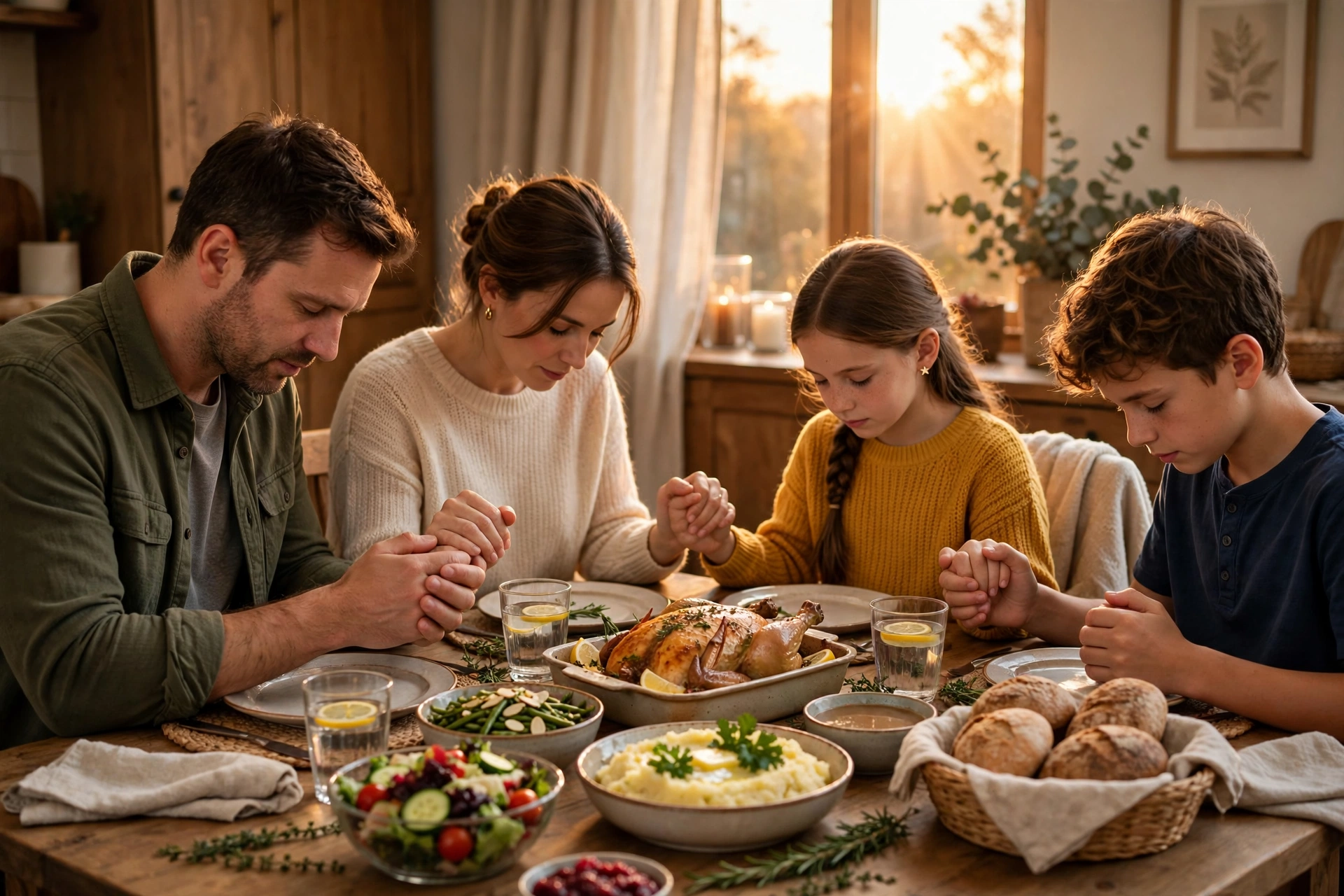
Blessing food before a meal is one of the simplest and most meaningful habits a family can build. It takes less than a minute, yet it changes the whole feeling of the table — everyone pauses, breathes, and remembers to be thankful for the food in front of them. If you have ever wondered how to bless food, what words to say, or whether there is a "right" way to do it, this guide will walk you through everything, step by step.
You do not need special training, a memorized prayer, or a perfect moment. Blessing food is simply a short prayer of thanks offered before eating — a way to pause, honor the hands that prepared the meal, and invite gratitude into an ordinary day. Whether you are praying alone, with your family, or in front of guests, the heart of the practice is the same: slow down, give thanks, and then enjoy the meal together.
In this guide, you will learn what blessing food really means, a simple five-step method you can use at any meal, short example prayers for family dinners, guests, holidays, and quiet meals alone, and the do’s and don’ts that keep the moment warm instead of awkward. If you are looking for a ready collection of longer prayers to read aloud, you will also find our full prayer for food blessing collection helpful — this article is the practical how-to, and that page is the prayer book.
What Does It Mean to Bless Food?
To bless food means to offer thanks and ask for God’s blessing over the meal before eating it. In Christian tradition it is often called "saying grace," and in many homes it is a short prayer said aloud while everyone is seated at the table. The words are less important than the intention behind them: gratitude for the food, for the people who grew, cooked, and served it, and for the chance to share it together.
Blessing food is not about the food being somehow unsafe or unworthy before the prayer. It is about remembering that a meal is a gift. A farmer grew it, a driver carried it, a cook prepared it, and someone you love set it on the table. A blessing simply names that chain of gifts out loud before the first bite.
People bless food in many ways. Some families use the same short prayer every night, like "Bless us, O Lord, and these Thy gifts which we are about to receive from Thy bounty." Others pray in their own words each time. Some bow their heads silently for a few seconds. Some hold hands around the table. All of these are valid — there is no single correct script, and a sincere prayer in plain words is always enough.
Why Bless Food Before Eating?
If blessing food feels like an extra step, it helps to know what it actually gives back. Families who bless their meals often say the practice does far more than fill a religious duty:
- It builds gratitude. Pausing before eating trains everyone — especially children — to notice that food is something to be thankful for, not something to rush past.
- It brings the table together. When everyone stops, holds hands, or bows their heads at the same moment, the meal starts as a shared experience instead of everyone eating on their own schedule.
- It slows the day down. A thirty-second prayer is a small pocket of calm between a busy day and a busy evening, and it makes the meal itself feel more peaceful.
- It teaches children faith in a natural way. Kids learn prayer best by hearing it at the table, in ordinary words, every single day — not from a lesson, but from a habit.
- It honors the cook. A blessing that thanks the person who made the meal is one of the kindest things you can say before eating it.
None of this requires a long prayer. A short, honest blessing said with real attention does all of it.
How to Bless Food: 5 Simple Steps
Here is the simplest way to bless food before any meal. You can use these steps at a family dinner, a holiday feast, a lunch alone, or a table full of guests.
Step 1: Pause and Gather Everyone
Wait until everyone is seated and the food is on the table. If you are eating together, ask everyone to pause for a moment — phones down, serving spoons down, hands free. If you are alone, simply stop, sit down, and take one slow breath before you begin. This pause is the whole secret: it turns an ordinary meal into a moment.
Step 2: Bow Your Heads or Hold Hands
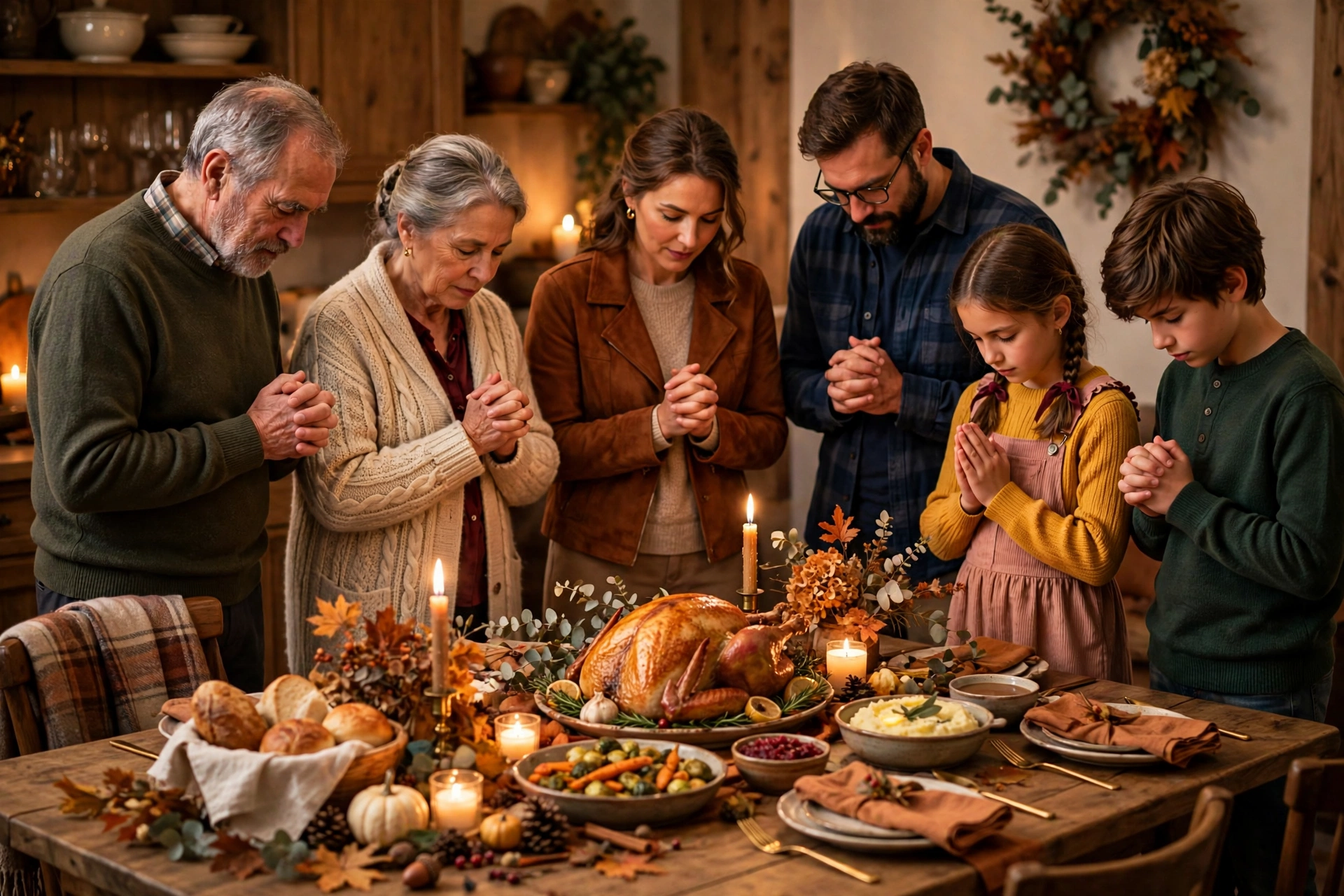
Most families bow their heads, close their eyes, or hold hands around the table. Choose whatever feels natural in your home. Holding hands is especially lovely with children, because it keeps little hands busy and makes everyone feel included. There is no rule here — the gesture is just a way of saying "we are doing this together."
Step 3: Say a Short Prayer of Thanks
Speak a short prayer out loud, in your own words or using one of the examples below. A good blessing has three simple parts: thank God for the food, thank the people who made it possible, and ask for His blessing on everyone eating it. That is all it needs. Thirty seconds is plenty, and a prayer that is short and sincere is always better than a long one said on autopilot.
Step 4: End With "Amen"
"Amen" simply means "so be it" — it signals that the prayer is finished and everyone can begin eating. If children are at the table, teaching them to say "Amen" together at the end gives them a clear, happy way to take part.
Step 5: Begin the Meal Together
After the blessing, start eating together. If you are the host, you can invite everyone to serve themselves, or begin passing dishes. The blessing has done its work: the meal now starts with gratitude, not with a rush.
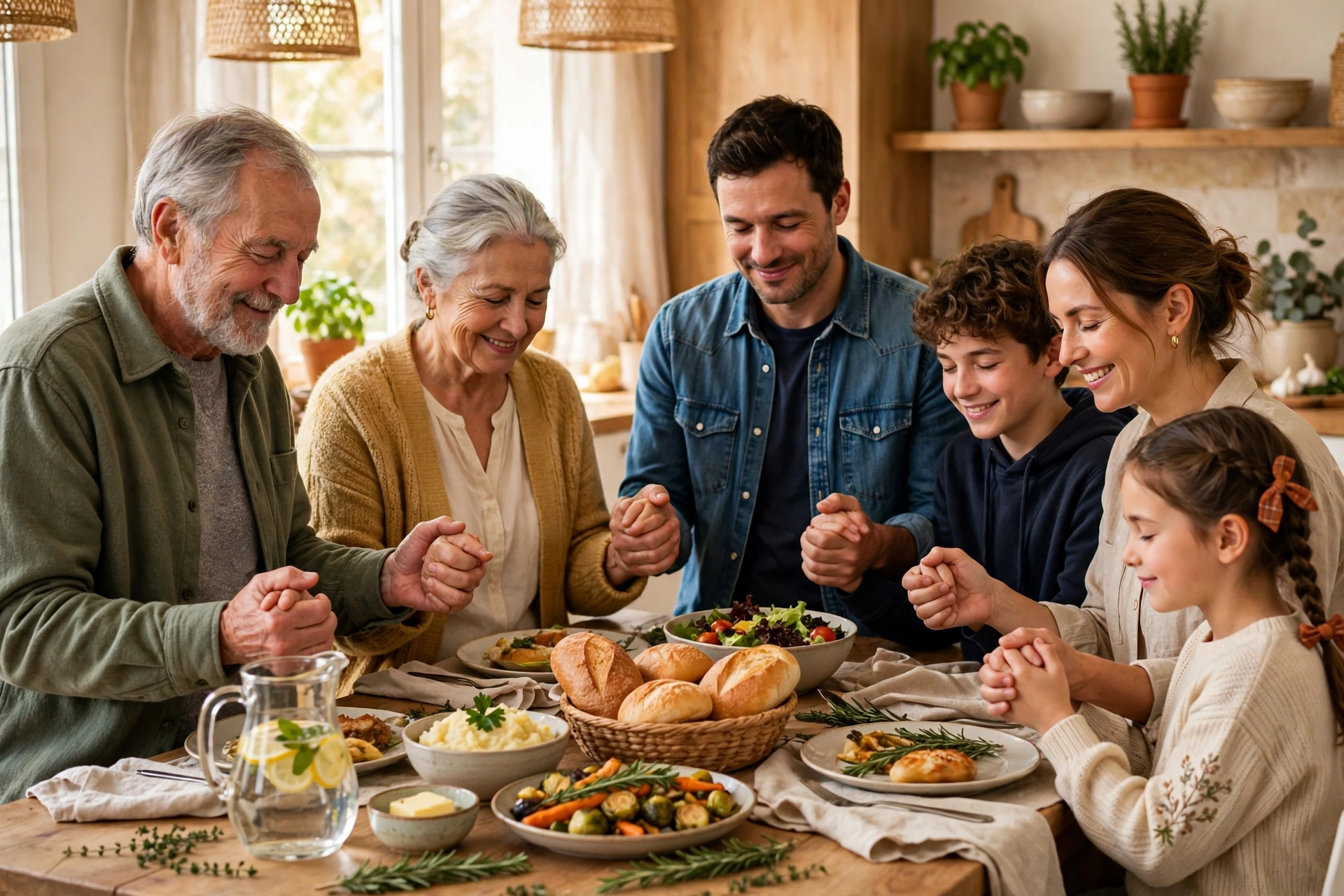
Short Example Prayers to Bless Food
You never have to write a new prayer from scratch. These short examples cover the most common meals, and you can use them exactly as written or adapt them to your own words.
A Simple Blessing for Every Day
"Dear God, thank You for this food, for the hands that prepared it, and for the family gathered here. Bless this meal and bless us as we share it together. Amen."
This is the perfect all-purpose prayer — short enough to memorize, warm enough to use every night.
A Blessing for Family Dinner
"Heavenly Father, thank You for this dinner and for this family. Thank You for a home, for work that provides, and for a table where we can all sit together. Bless this food to our bodies and bless our time together tonight. In Jesus’ name, Amen."
A Blessing When Guests Are at the Table
"Lord, thank You for this food and for the friends who share our table tonight. Bless this meal, bless the hands that made it, and bless the conversation and laughter we will share. May everyone leave this table fuller — in body and in heart. Amen."
A Blessing for Holidays and Special Meals
"Gracious God, thank You for this special day and for this table full of Your goodness. Thank You for family near and far, for traditions that bring us together, and for a meal prepared with love. Bless this food, bless this gathering, and let this meal remind us of all we have to be thankful for. Amen."
A Quiet Blessing When Eating Alone
"Thank You, Lord, for this meal and for this quiet moment. Bless this food, give me strength for the rest of my day, and help me remember that I am never truly alone. Amen."
A Short Blessing Children Can Learn
"Thank You, God, for this yummy food, for Mommy and Daddy, and for our family. Bless our dinner. Amen."
Children remember short, cheerful prayers best. Let them lead the blessing sometimes — even a wobbly, giggling prayer is a beautiful one.
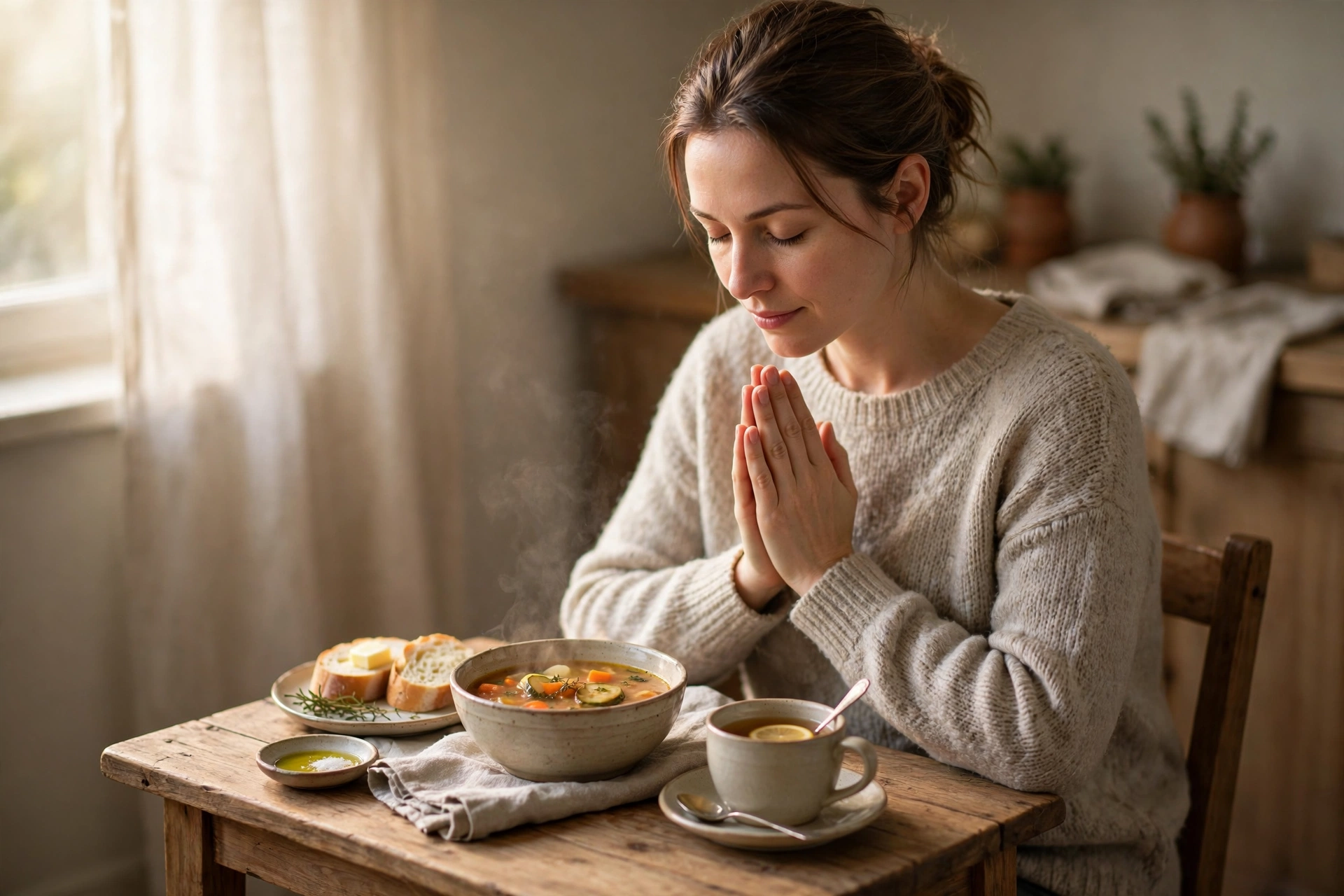
Blessing Food for Different Occasions
Not every meal is the same, so your blessing does not have to be either. This quick guide shows how to match the prayer to the moment.
| Occasion | Best approach | Example length |
|---|---|---|
| Weeknight family dinner | Same short prayer each night | 15–30 seconds |
| Sunday dinner | A slightly longer prayer of thanks | 30–60 seconds |
| Guests or dinner party | Warm, welcoming blessing that includes the guests | 30–45 seconds |
| Holiday meal (Thanksgiving, Christmas) | A heartfelt prayer naming family and gratitude | 45–90 seconds |
| Breakfast on a busy morning | One short sentence of thanks | 5–10 seconds |
| Eating alone | A quiet, personal prayer | 10–20 seconds |
| Meal with children | A simple prayer children can repeat | 15–20 seconds |
The pattern is simple: the more special the meal, the more time the blessing can take — but even on the biggest holiday, a blessing should still feel warm, never like a speech.
Do’s and Don’ts When Blessing Food
A blessing should feel like a gift, not a performance. These do’s and don’ts will keep it that way.
Do:
- Keep it short and sincere. A thirty-second prayer said with real attention is better than a two-minute prayer everyone endures.
- Use your own words. Prayers in plain, everyday language sound honest — and they are easier for children to copy.
- Include the people at the table. Thanking the cook by name, or praying for a family member who is sick or far away, makes the blessing personal.
- Let different people lead. Taking turns — including the children — keeps the habit fresh and gives everyone ownership of it.
- Stay consistent. The blessing matters most when it happens every meal, not only on Sundays or holidays.
Don’t:
- Don’t make it a lecture. The dinner table is not the place for a sermon; save longer prayers for another time.
- Don’t embarrass anyone. If guests do not share your faith, keep the blessing short and gracious — a simple prayer of thanks offends no one.
- Don’t rush through it. Mumbling a memorized prayer at top speed teaches children that prayer is a chore to get through.
- Don’t skip it when you are busy. Busy nights are exactly when a thirty-second pause helps most.
- Don’t worry about perfect words. God is not grading your grammar; a simple, honest "thank You for this food" is a complete blessing.
Common Mistakes People Make When Blessing Food
Even good intentions can go sideways at the table. Here are the mistakes to avoid:
Making it too long. The most common mistake is a blessing that goes on so long the food gets cold and the children start fidgeting. Short is not shallow — it is respectful of everyone’s time and hunger.
Using words nobody understands. Old-fashioned language can be beautiful, but if your children cannot understand the prayer, they cannot learn from it. Plain words win.
Turning the blessing into a correction. A prayer is not the moment to mention who forgot to set the table or who was late. Keep the blessing focused on thanks.
Only blessing food on special days. If grace only appears at Thanksgiving, children learn that gratitude is a holiday costume. The habit is built on ordinary Tuesdays.
Forcing guests to perform. If guests are present, you lead the prayer and they simply bow their heads. Never put a guest on the spot by asking them to pray aloud unless they offer.
How to Start the Habit If Your Family Has Never Blessed Food
Starting a new table tradition can feel awkward for about a week — and then it becomes the most natural thing in the world. Here is how to begin:
- Tell the family first. At the start of the meal, simply say, "Before we eat, let’s take a moment to say thank You for this food." No big announcement is needed.
- Start with the simplest prayer. Use the everyday blessing above — or even one sentence: "Thank You, God, for this food. Amen." Simple is strong.
- Keep it the same for a while. Repeating the same short prayer each night helps children memorize it and helps adults stop overthinking it.
- Hold hands. A physical cue like holding hands signals to everyone, including small children, that the blessing has begun.
- Be patient with giggles. Children will laugh, peek, and squeeze hands too hard. That is fine. A joyful table is exactly what the blessing is for.
- Do not skip the hard days. The nights when everyone is tired and cranky are the nights the pause matters most.
Within two weeks, the blessing will feel less like a new rule and more like the way your family eats.

Frequently Asked Questions About Blessing Food
How long should a blessing before a meal be?
For an everyday meal, 15 to 30 seconds is ideal. For a holiday or special gathering, 45 to 90 seconds is fine. The best measure is simple: if the food is getting cold or the children are getting restless, the prayer has gone on long enough.
What is the difference between blessing food and saying grace?
They are the same thing. "Saying grace" is the traditional name for the prayer said before a meal, and "blessing food" describes the same act in plain words. Both mean offering thanks and asking God’s blessing over the food.
Can I bless food in my own words?
Yes — absolutely. A blessing in your own words is often more meaningful than a memorized prayer, because it reflects your real life, your real family, and your real gratitude. Memorized prayers are wonderful too, but they are never required.
Should I bless food when eating alone?
Yes. Blessing food alone is a quiet, grounding habit. It turns a rushed solo meal into a moment of gratitude, and it keeps the practice alive on the days when nobody else is at the table.
What do I say if guests at my table do not share my faith?
Keep the blessing short, warm, and focused on thanks — something like, "Thank you for this food and for the friends who share our table." You do not need to explain or apologize, and you do not need to ask guests to participate in a way that makes them uncomfortable. A simple prayer of gratitude is welcome at almost any table.
Is it okay to bless food silently?
Yes. A silent blessing — a few seconds of bowed head and quiet thanks — is completely valid. It is a good choice in restaurants, at work lunches, or anywhere a spoken prayer would draw unwanted attention.
What Bible verse can I use to bless food?
A much-loved choice is 1 Timothy 4:4–5: "For everything God created is good, and nothing is to be rejected if it is received with thanksgiving." Another is Psalm 145:15–16, which speaks of God opening His hand and satisfying the desires of every living thing. Either verse can stand alone as a blessing, or you can quote one line and add a short prayer of your own.

Final Thoughts
Learning how to bless food is not about memorizing the perfect prayer — it is about building a small, daily habit of gratitude. Start tonight, keep it short, use your own words, and let the blessing become part of the meal itself. Over time, you will notice something surprising: the thirty seconds before dinner become one of the calmest, warmest parts of the whole day.
If you would like a ready collection of prayers to read aloud at the table, explore our full prayer for food blessing collection — it pairs perfectly with the steps in this guide. And if this guide helped you, share it with a friend who is starting the same habit. A blessed table is always better when it is shared.