


Someone sneezes across the table at a taco truck in East Los Angeles, and before the napkin even moves, a woman calls out warmly: ¡Salud! A few minutes later, an older man leaves the table, rests his hand on his grandson’s shoulder, and says Dios te bendiga. If you’ve ever wondered how to say “bless you” in Spanish — and when each version is actually the right one — this guide has you covered.
Here’s the thing most phrasebooks gloss over: Spanish doesn’t have a single catch-all blessing the way English does. The words change depending on whether someone sneezed, whether you’re talking about God, whether you’re being formal, and even which country you’re in. Get it right, though, and you’ll sound warm, respectful, and genuinely connected — because in Spanish-speaking cultures, a blessing is never just a throwaway line. It’s a small gift of goodwill.
What Do Spanish Speakers Say After a Sneeze? ¡Salud!

In the English-speaking world, “bless you” is what pops out when somebody sneezes. In Spanish, that job belongs to ¡Salud! — which literally means “health.” You’re not blessing the sneezer so much as wishing them good health right back, which honestly makes a lot of sense when you think about it.
¡Salud! is universal. From Mexico City to Madrid to Buenos Aires, everyone understands it, everyone uses it, and nobody thinks twice about it. Say it warmly, say it promptly, and say it every time — Spanish speakers tend to acknowledge each sneeze, not just the first one.
A fun bit of history: in Spain, the older tradition was to say ¡Jesús! after a sneeze, a little prayer against illness dating back centuries. You may still hear it from grandparents in Spain, and it explains why some Spanish families have their own charming hybrid traditions. But today, ¡Salud! is the standard nearly everywhere.
And then there’s Mexico’s delightful custom for serial sneezers. Sneeze once and you’ll hear salud (health). Sneeze a second time and someone will add dinero (money). A third sneeze earns amor (love) — health, money, and love, the three things nobody minds extra help with. It’s playful, it’s warm, and it’s a perfect example of how a simple blessing in Spanish carries real personality.
How to Say “God Bless You” in Spanish

Now for the question people really mean when they ask how to say “God bless you” in Spanish: ¡Dios te bendiga! That’s the standard, natural translation — literally “God bless you,” spoken to someone you address informally (with tú).
This is the blessing you’ll hear everywhere Spanish is spoken: when someone is sick, before a big exam, after a kind deed, at church, or as a heartfelt farewell. Parents say it to their children leaving for school. Friends text it before a job interview. Strangers exchange it after a moment of kindness. It carries genuine warmth — it never feels like a formality.
A few important variations to know:
- Dios te bendiga — the everyday version, informal (tú). Use it with friends, family, peers, and anyone your age or younger.
- Dios le bendiga — the formal version (usted). Use it with older adults, authority figures, or anyone you’d address respectfully. It shows real manners.
- Que Dios te bendiga — “May God bless you.” The que adds a prayerful, wishing tone, like something you’d write in a card or say at a goodbye with real feeling.
- Bendiciones — simply “blessings.” A short, warm sign-off you’ll hear often among Christians, especially in Latin America, similar to saying “blessings on you.”
Notice something: none of these get used for sneezes. That’s the number-one thing English speakers get wrong. If someone sneezes and you cheerfully announce ¡Dios te bendiga!, you’ll get smiles — it’s not rude, but it sounds like you’ve mistaken a sneeze for a spiritual event. For sneezes, it’s always ¡Salud!
One more thought for the culturally curious: Dios te bendiga has Christian roots, but in everyday Latin American life it’s used so broadly that it functions almost like “take care” with extra warmth. Still, if you’re unsure about someone’s beliefs, you can always lean on neutral well-wishes like ¡Que te vaya bien! (“Hope it goes well for you!”) or ¡Mucha suerte! (“Good luck!”). Nobody is ever offended by kindness offered in the right spirit.
The Complete Phrase Table: Every “Bless You” in Spanish
Here’s your cheat sheet — the English phrase, the Spanish equivalent, what it literally means, and exactly when to use it:
| English phrase | Spanish phrase | Literal meaning | When to use it |
|---|---|---|---|
| Bless you (after a sneeze) | ¡Salud! | Health! | Everywhere, every sneeze — the universal default |
| God bless you (informal) | ¡Dios te bendiga! | God bless you | Friends, family, peers; illness, gratitude, farewells |
| God bless you (formal) | Dios le bendiga | God bless you (formal) | Elders, authority figures, strangers you respect |
| May God bless you | Que Dios te bendiga | May God bless you | Prayerful tone; cards, messages, heartfelt goodbyes |
| Blessings! | ¡Bendiciones! | Blessings | Warm sign-off, common in Latin American Christian circles |
| Bless you (older, Spain) | ¡Jesús! | Jesus! | Traditional in Spain, mostly heard from older generations |
How to Pronounce These Phrases Like a Native

Saying the words is one thing; saying them so they sound natural is another. Here’s how to pronounce the key phrases:
- ¡Salud! — sah-LOOD. The stress lands hard on the second syllable. The final d is soft, almost like a gentle “th” in parts of Spain. Say it brightly, with a lift at the end — it’s a wish, not a mumble.
- ¡Dios te bendiga! — dee-OHS teh ben-DEE-gah. Four smooth beats. The g in bendiga is a soft fricative (like a gentle gargle), not the hard g of English “go.”
- Dios le bendiga — dee-OHS leh ben-DEE-gah. Same rhythm as above, just swapping te for le.
- Que Dios te bendiga — keh dee-OHS teh ben-DEE-gah. The que flows straight into Dios without a pause.
- ¡Bendiciones! — ben-dee-SYOH-nehs. Stress on the o; the c before i sounds like an s in Latin America and like a soft th in most of Spain.
A quick tip that makes a huge difference: Spanish vowels never change. Every a is “ah,” every o is “oh,” every single time. If you keep your vowels pure and steady, you’ll already sound more natural than most learners. And don’t rush — Spanish blessings are spoken with feeling, not speed.
Try this 30-second practice drill: say ¡Salud! three times, each one a little warmer than the last. Then say Dios te bendiga slowly, feeling the rhythm of the four beats — dee-OHS · teh · ben-DEE · gah. Now say it again at normal speed, the way you’d say it to a friend heading into a job interview. Congratulations — you just learned how to say “bless you” in Spanish out loud, not just on paper.
Regional Differences: Mexico, Spain, Argentina, Colombia, and Beyond
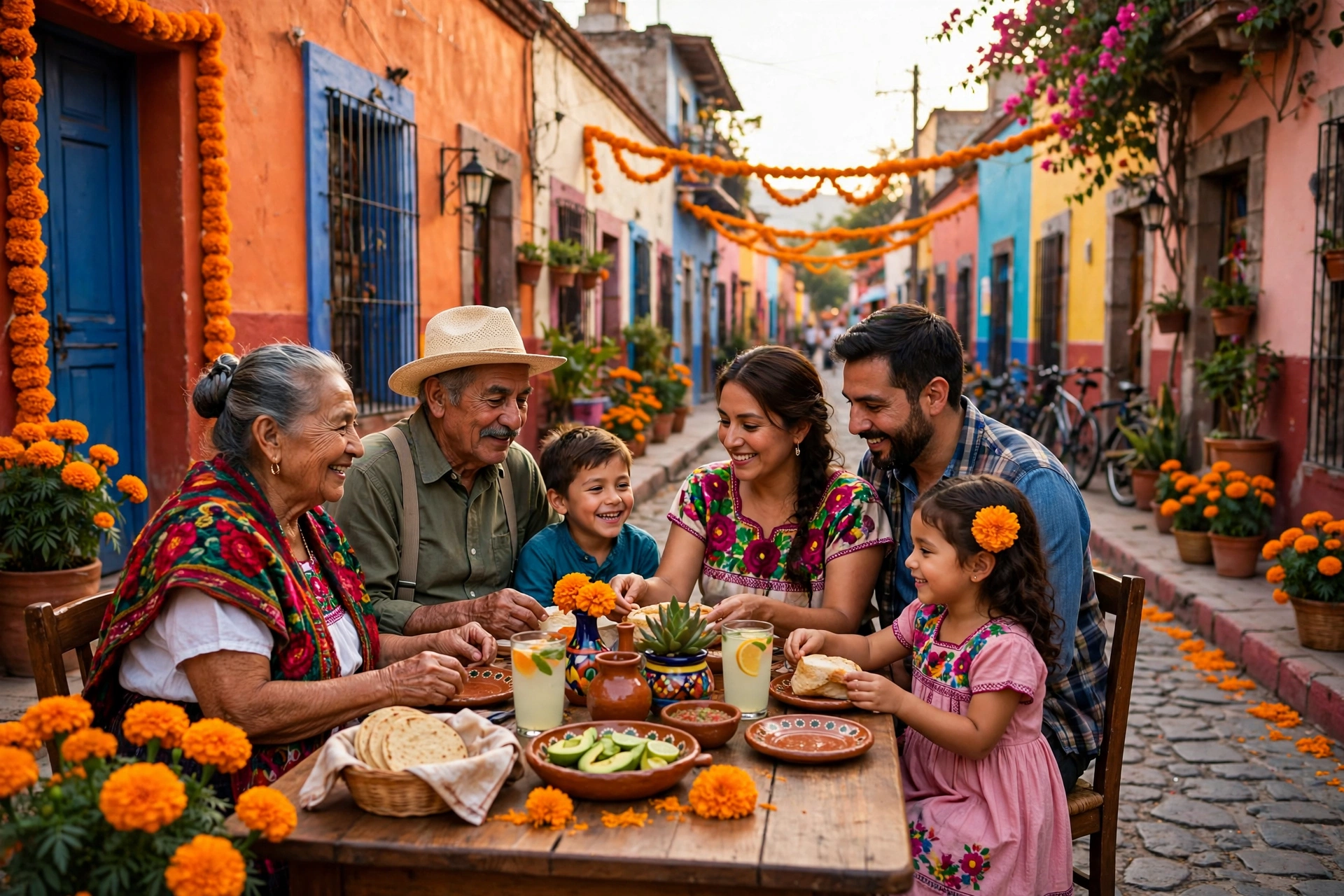
Spanish is spoken across more than twenty countries, and while ¡Salud! and Dios te bendiga work everywhere, each region seasons its blessings with its own flavor:
Mexico
Mexico has the richest sneeze tradition of all: salud, dinero y amor across three sneezes, as we covered above. Dios te bendiga is woven into daily life — it’s a common farewell from parents, grandparents, and even shopkeepers. You might also hear the fuller blessing Dios te bendiga y te proteja (“God bless you and protect you”), especially from elders.
Spain
In Spain, ¡Salud! is standard for sneezes, though you’ll still catch ¡Jesús! from older Spaniards. Dios te bendiga is understood everywhere but used a bit less casually than in Latin America — Spain is more secular on the surface, so the phrase tends to appear in family, religious, or heartfelt contexts rather than as an everyday farewell.
Argentina and Uruguay
¡Salud! does double duty here — it’s also the word for “cheers” when toasting, which can cause a moment of delightful confusion at dinner parties. Dios te bendiga is used, but Argentines with Italian heritage sometimes blend in their own expressions. The warmth is the same; the accent is pure Río de la Plata.
Colombia and Venezuela
Here Dios te bendiga flows like water — it’s a genuine everyday expression of goodwill, used with friends, strangers, and everyone in between. Colombians are famous for their courtesy, and a heartfelt blessing is part of that national warmth. ¡Salud! covers the sneezes, exactly as elsewhere.
Central America and the Caribbean
In countries like Guatemala, El Salvador, and the Dominican Republic, Dios te bendiga and bendiciones are deeply embedded in daily speech. Don’t be surprised if a bus driver blesses you as you step off — it’s sincerity, not ceremony.
| Region | After a sneeze | Distinctive blessing touch |
|---|---|---|
| Mexico | ¡Salud! (then dinero, amor for sneezes 2–3) | Dios te bendiga y te proteja from elders |
| Spain | ¡Salud! (older folks: ¡Jesús!) | Dios te bendiga reserved for heartfelt moments |
| Argentina / Uruguay | ¡Salud! (also means “cheers!”) | Italian-influenced warmth, same core phrases |
| Colombia / Venezuela | ¡Salud! | Dios te bendiga as everyday courtesy |
| Central America / Caribbean | ¡Salud! | Bendiciones used constantly as a warm sign-off |
How to Respond When Someone Blesses You

Blessings in Spanish are a two-way street — someone gives one, and you’re expected to receive it gracefully. Here’s how:
- ¡Gracias! — “Thank you!” The universal, always-correct response. Whether someone said ¡Salud! after your sneeze or Dios te bendiga at your farewell, a warm gracias with a smile never misses.
- ¡Igualmente! — “Likewise!” / “Same to you!” Perfect when someone wishes you well and you want to return the kindness. If a friend says Dios te bendiga before your big presentation, answering igualmente says “right back at you.”
- ¡Amén! — “Amen!” Common in Christian contexts when someone speaks a blessing over you. It’s a way of saying “I receive that” — agreement with the blessing itself.
- Gracias, igualmente — combining the two is the gold standard of polite responses, especially with elders: thank you, and the same to you.
- A smile and a nod — for a quick ¡Salud! from a stranger across the room, a genuine smile is completely enough. No one expects a speech.
One cultural note worth remembering: don’t wave blessings off or say “you didn’t have to.” In Spanish-speaking cultures, receiving a blessing graciously honors the giver. Accept it, smile, and return the warmth — that’s the whole dance.
Common Mistakes to Avoid
Even well-meaning learners stumble here. Sidestep these and you’ll be ahead of the curve:
- Saying “Dios te bendiga” for a sneeze. The classic mix-up. Sneezes get ¡Salud! — always. Save Dios te bendiga for actual blessings.
- Using “te” with someone you should address formally. Telling your friend’s 85-year-old grandmother Dios te bendiga isn’t offensive, but Dios le bendiga shows the respect she’s earned. When in doubt with elders, go formal.
- Translating “bless you” word-for-word into “bendecirte.” The verb bendecir exists, but nobody says te bendigo as a blessing formula — it sounds strange, like a spell from a fantasy novel. Use the set phrases.
- Forgetting the upside-down exclamation mark. In writing, Spanish blessings open with ¡. It’s a small thing, but ¡Dios te bendiga! looks right and Dios te bendiga! looks like you forgot half the punctuation. (In casual texts, nobody will judge you — but in anything formal, include it.)
- Pronouncing “bendiga” with a hard English G. Keep it soft — ben-DEE-gah with that gentle fricative sound. A hard “go” sound marks you as a beginner instantly.
- Only saying it once for multiple sneezes. In English we often bless the first sneeze and go quiet. In Spanish, each sneeze gets its ¡Salud! — and in Mexico, each one gets a funnier upgrade.
Beyond Words: The Gestures That Go With Spanish Blessings
In Spanish-speaking cultures, a blessing often comes with body language that makes it land even harder. Watch for these — and feel free to use them yourself:
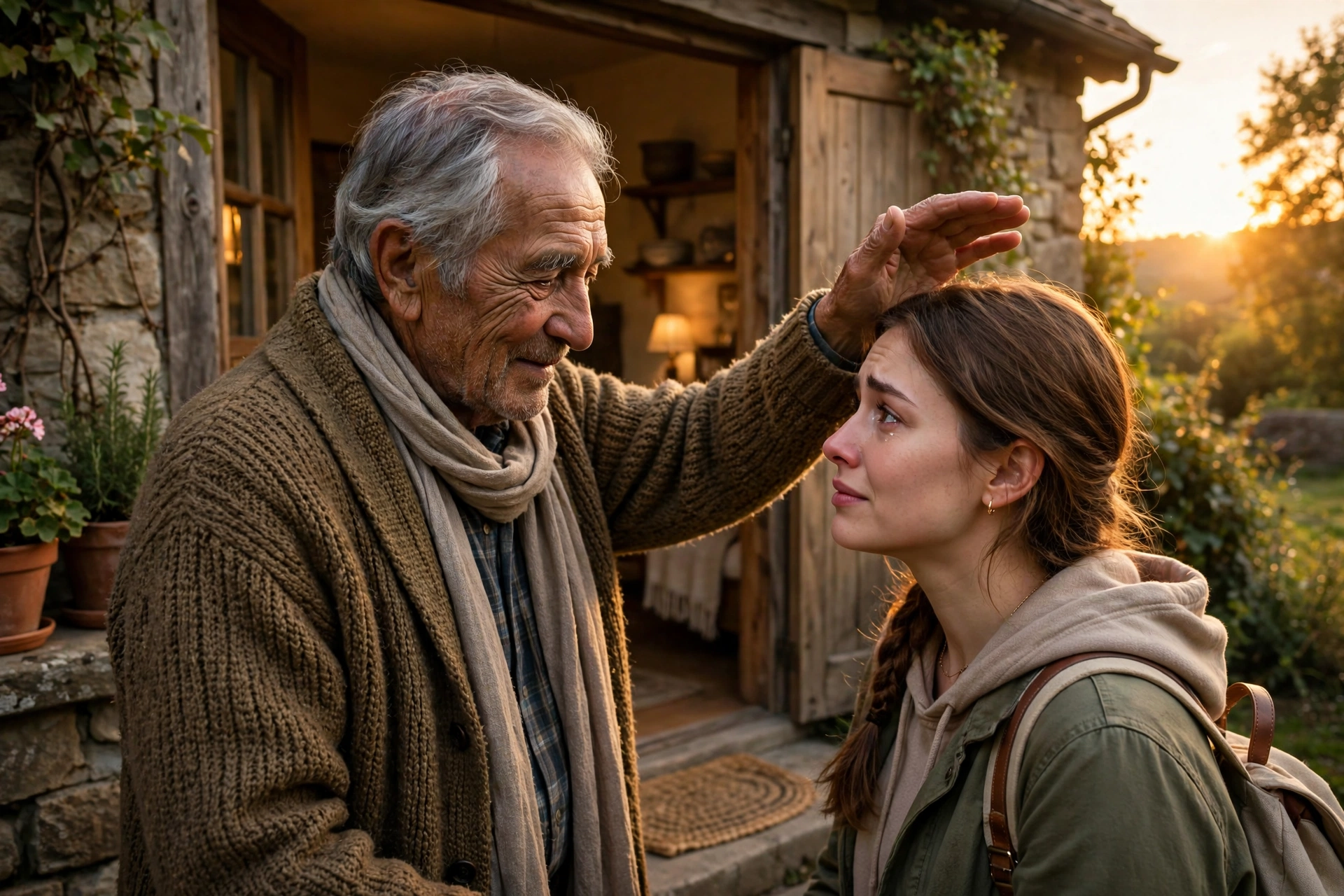
- The hand on the shoulder or head. When a parent or grandparent says Dios te bendiga to a child leaving the house, there’s usually a hand involved — on the head for little ones, on the shoulder for teens. It’s the physical version of the words: protection you can feel.
- The sign of the cross. In Catholic families, elders sometimes trace a small cross in the air toward you as they bless you. You don’t need to do anything in return except receive it with a smile.
- The warm embrace. A blessing at a farewell — que Dios te bendiga as someone heads to the airport — almost always comes with a hug that lasts a beat longer than usual. The words and the warmth are one package.
- The raised glass. Since ¡Salud! means both “bless you” (after a sneeze) and “cheers” (when toasting), raising a glass with eye contact and a hearty ¡Salud! is the celebratory cousin of the sneeze blessing — same word, same wish for health, just with better drinks.
None of these gestures are mandatory, but knowing them helps you read the room. When a blessing in Spanish comes with a hand on your shoulder, you’ll understand you’re receiving something meaningful — and you’ll know exactly how to receive it.
Frequently Asked Questions
How do you say “bless you” in Spanish after someone sneezes?
Say ¡Salud! (pronounced sah-LOOD), which literally means “health.” It’s the universal response to a sneeze across every Spanish-speaking country. Don’t use “Dios te bendiga” for sneezes — that’s reserved for actual blessings.
What is “God bless you” in Spanish?
¡Dios te bendiga! is the standard translation, used informally with friends and family. For formal situations — elders, authority figures — use Dios le bendiga. For a more prayerful tone, say Que Dios te bendiga (“May God bless you”).
What does “salud, dinero y amor” mean?
It’s a beloved Mexican tradition for consecutive sneezes: the first sneeze gets salud (health), the second gets dinero (money), and the third gets amor (love). It’s playful, affectionate, and a wonderful example of how blessings in Spanish carry cultural personality.
Is it “Dios te bendiga” or “Dios le bendiga”?
Both are correct — they differ in formality. Dios te bendiga uses the informal tú form (friends, family, peers), while Dios le bendiga uses the formal usted form (elders, strangers you respect, professional settings). Choosing the formal version with older adults is a sign of good manners.
Can I use “bendiciones” as a goodbye?
Yes — ¡Bendiciones! (“Blessings!”) is a warm, common sign-off in Latin America, especially among Christians. It works at the end of conversations, messages, and social media comments. It’s friendlier and less formal than Dios te bendiga, and it always lands well.
Related Reading
- May God Bless You: Meaning, Prayers & When to Say It
- Why Do We Say “Bless You” When Someone Sneezes?
- What Is a Blessing? Meaning, Types & Examples
- “Bless Your Heart” Meaning: Southern Saying Explained
Learning how to say “bless you” in Spanish is really about learning how Spanish speakers show care. A quick ¡Salud! says “I noticed you, and I wish you well.” A heartfelt Dios te bendiga says “you matter to me.” These aren’t just translations — they’re tiny bridges between people. So the next time someone sneezes near you, or a friend heads off toward something big, you’ll know exactly what to say. ¡Salud! — and Dios te bendiga on your journey.