

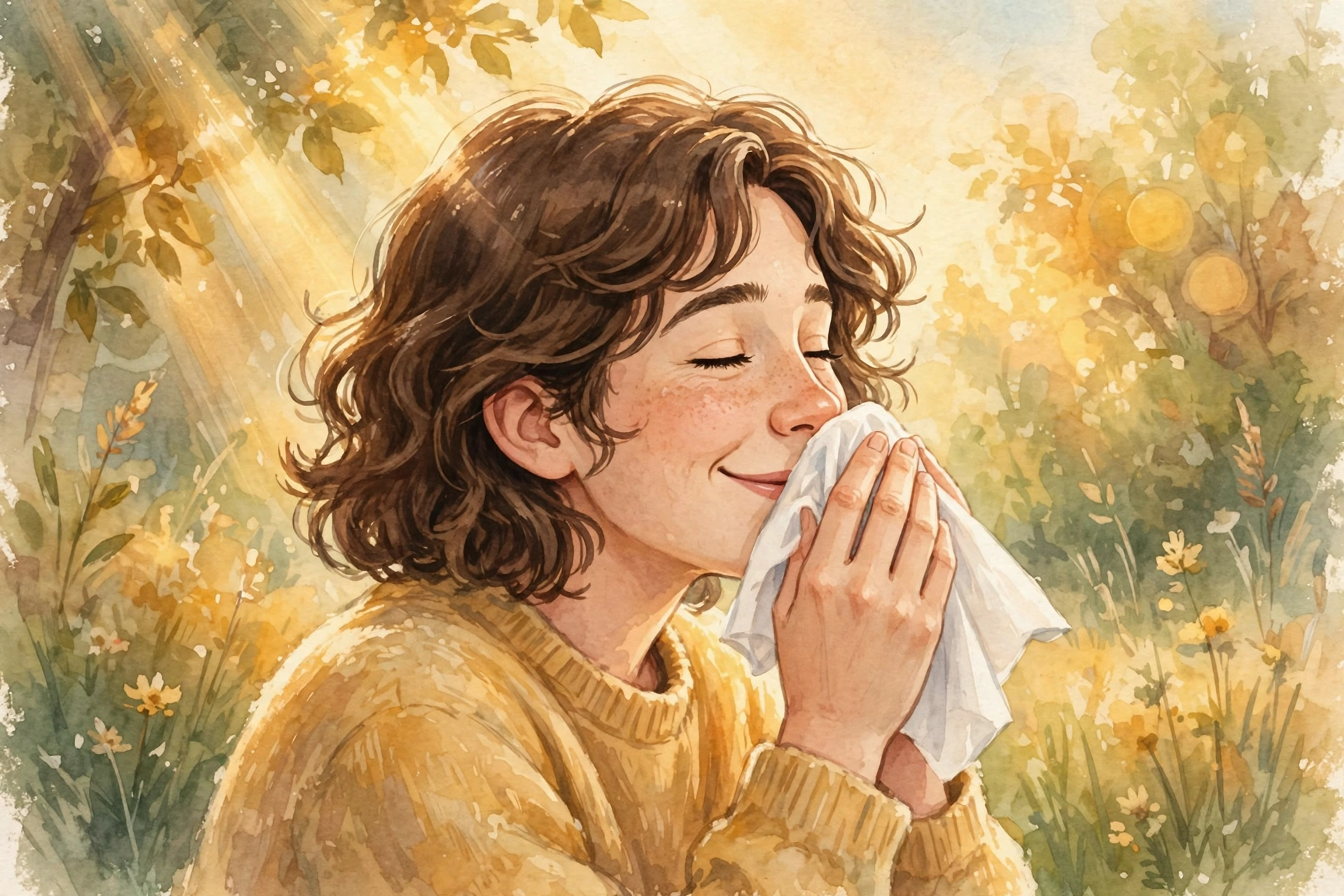
You’re standing in a quiet grocery line when it happens. Achoo. The sound cracks the silence like a firecracker. Heads turn, a toddler giggles, and before the echo even fades, a stranger two carts away calls out, “Bless you!” You didn’t ask for a blessing. You didn’t even sneeze in their direction. And yet there it is — the tiny, automatic kindness we hand to sneezers, dozens of times a day, without a second thought.
It’s such a reflex that we almost never stop to ask the obvious question: why do we say bless you when someone sneezes? Why do people say “bless you” at all — and not, say, “nice sneeze” or “way to clear your sinuses”? The real answer is far richer than you’d expect. It winds through ancient Rome, a devastating medieval plague, demons lurking at the doorway of your soul, and one pope who turned a folk habit into a religious duty. Here’s the full story.
The short answer: Saying “bless you” after a sneeze is an ancient custom with layered origins. In Rome, Pliny the Elder noted that people greeted sneezers because a sneeze was seen as an omen; the Greeks said “Zeus preserve you.” The phrase took its modern religious shape around 590 AD, when Pope Gregory the Great ordered the response “God bless you” during a devastating plague — sneezing was an early symptom of the disease. Older folk beliefs added urgency: a violent sneeze was thought to let the soul escape the body, or to open the body so evil spirits could slip in. A quick blessing was spiritual first aid.
Where “Bless You” Really Came From: The Real History
Like most habits that old, the bless you meaning we know today didn’t come from one single moment. It’s a stack of beliefs piled up over two thousand years — Roman omens, Greek gods, a plague, and genuine fear of the supernatural. Let’s peel the layers back, one era at a time.
Ancient Rome: A Sneeze Was an Omen
If you’ve ever wondered where did “bless you” come from, the trail starts in togas. The Roman writer Pliny the Elder, writing in the first century AD, observed that it was customary to greet a person who sneezed. Romans treated a sneeze as an omen — sometimes a good one, sometimes a warning — and the greeting was a way of tipping the scales toward the good. One common version was “Jupiter preserve you,” calling on the king of the gods to keep the sneezer safe.
The poet Catullus even built a love poem around a sneeze, treating it as a sign of affection and good fortune. Sneezing carried weight in Rome. It was a small event with big meaning, and it deserved words. That instinct — marking the moment with a blessing — never really left Western culture.
The Greeks Said “Zeus Preserve You”
The Romans weren’t the first, though. The ancient Greeks had their own sneeze etiquette centuries earlier. Aristotle wrote about sneezing as something touched by the divine — a sneeze could signal that the gods were at work around you. The Greek response was roughly “Zeus preserve you” or “long life to you.”
The logic was simple and deeply human: a sneeze was a moment when the sacred brushed up against the ordinary, so you marked it with words. Whether the sneeze meant favor or warning depended on the moment, but either way, silence wasn’t an option.
Pope Gregory the Great and the Plague
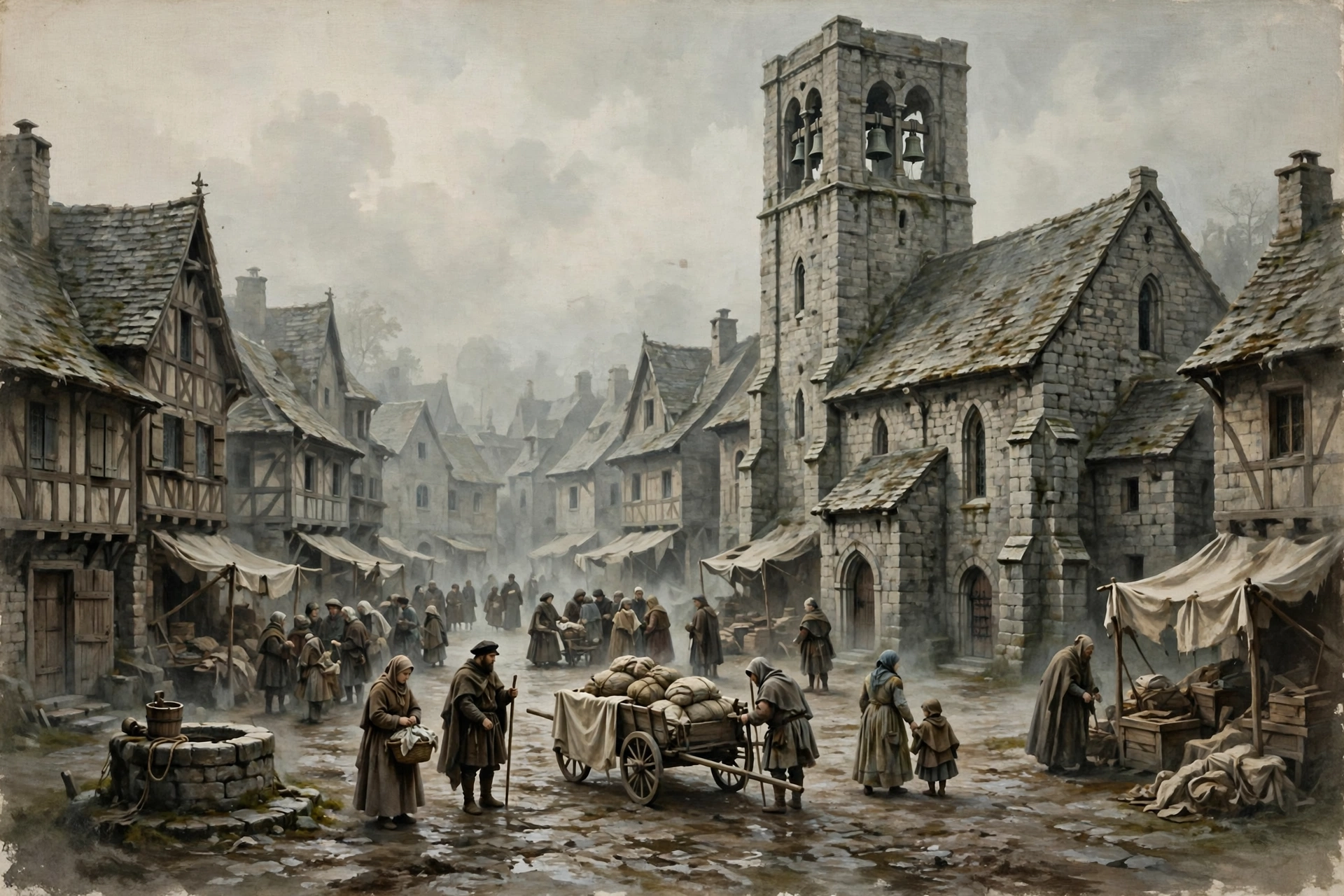
The biggest turning point in the story came in the year 590 AD. A terrible plague was tearing through Rome — the era of the great plagues that repeatedly devastated the ancient and medieval world — and sneezing was recognized as one of its early symptoms. According to tradition, Pope Gregory I (later Saint Gregory the Great) ordered unceasing prayer for divine mercy and commanded that anyone who sneezed be blessed immediately with the response “God bless you.”
Historians debate whether the order happened exactly as the legend describes, but the association stuck hard. The plague welded the phrase to sneezing across Christian Europe, and it never let go. After Gregory, “bless you” wasn’t just a polite custom anymore — it was a religious act, a small prayer spoken in a moment of fear. That plague-era version is the direct ancestor of the phrase we use today.
The Soul, the Heart, and Evil Spirits
Even older than the plague story are the folk beliefs that gave the blessing its real urgency. In many cultures, people genuinely believed that a violent sneeze could force the soul out of the body through the mouth — leaving the sneezer empty, unprotected, and possibly dying. A blessing spoken at that exact instant was meant to anchor the soul back in place.
Others told the story the other way around: the sneeze blew the body’s doors open, and evil spirits or demons were waiting just outside, ready to slip in through the mouth. The blessing slammed the door shut. Either way, the words were spiritual first aid — quick, spoken, and timed to the second.
There’s one more famous belief worth clearing up: that your heart stops when you sneeze. It doesn’t. But the sudden pressure change in your chest during a sneeze can briefly alter your heartbeat, and to a medieval mind, that strange flutter in the chest felt like proof that something supernatural was happening. No wonder they reached for a blessing.
What the Blessing Was Supposed to Do
Strip away two thousand years of folklore, and the blessing had two honest jobs.
First, protection. In a world without medicine, a sneeze during a plague year was terrifying — it could be the first sign you were dying. The words “God bless you” were a genuine prayer for survival, spoken by someone who might watch you fall ill tomorrow. It was care made audible.
Second, spiritual cover. If the soul could escape or demons could enter, the blessing was a shield raised at exactly the right moment. Timing mattered: you didn’t bless the sneezer an hour later. You said it immediately, while the spiritual danger was live.
Both jobs reveal something lovely about why do people say bless you in the first place. It was never really about the sneeze. It was about the person — a stranger, a friend, a neighbor — and the impulse to wish them well at a moment that felt, for very good reasons, a little dangerous.
What the Rest of the World Says Instead of “Bless You”
Here’s something most Americans don’t realize: saying “bless you” to a sneezer is not universal. Every culture noticed the same bodily event and invented its own response. Some kept the religious flavor. Others ditched it entirely in favor of wishing the sneezer good health. If you’re curious what do other countries say instead of bless you, this is the fun part of the story.

| Language / Country | What People Say | What It Means |
|---|---|---|
| German | Gesundheit | “Health” — a wish for good health, no religion involved |
| Spanish | Salud | “Health” — the same idea, in Spanish |
| French | À vos souhaits | “To your wishes” — may your wishes come true |
| Italian | Salute | “Health” |
| Russian | Bud’ zdorov (Будь здоров) | “Be healthy” |
| Arabic (Muslim tradition) | Yarhamuk Allah | “May God have mercy on you” — the sneezer replies with a blessing in return |
| Jewish tradition | Briut (Hebrew) / Tsu gezunt (Yiddish) | “To health” — and in some traditions tsesa lehayim, “to life” |
| Turkish | Çok yaşa | “Live long” |
| Japanese | (Usually nothing) | Sneezing is rarely commented on — a quiet nod is plenty |
| Korean | (Usually nothing) | Like Japan, no standard response |
Notice the pattern: most of the world skips the religious blessing and goes straight to health. That split tells you something about how the custom evolved in different places — where religion shaped the response, you got “bless you”; where folk medicine shaped it, you got “health.”
“Bless You” vs. “Gesundheit”: What’s the Difference?
In the United States, you’ll hear both phrases, sometimes from the same person. So which one is right? Honestly, both — they just carry different baggage.
| “Bless You” | “Gesundheit” | |
|---|---|---|
| Origin | Christian blessing tradition, via Rome and Pope Gregory | German folk custom |
| Literal meaning | A prayer for God’s blessing on the sneezer | Simply “health” |
| Religious tone | Mildly religious — mentions a blessing | Secular — no religious content |
| Common in | English-speaking countries everywhere | Germany, and the US via German immigrants |
| Best for | Everyday American etiquette | When you want a friendly, non-religious option |
Many Americans adopted “Gesundheit” from German-speaking neighbors and coworkers, and it stuck because it’s warm without being religious. There’s no rule here — use whichever feels natural. The sneezer will appreciate either one.
Is It Rude NOT to Say “Bless You”? Modern Etiquette
Here’s the question that really matters today: in an era when fewer people think about souls and spirits, is it rude not to say bless you? The honest answer: no. Nobody is obligated to bless your sneeze. But a little social awareness goes a long way. Here’s how to handle it in different situations.

- At home with family: Say it freely. It’s a tiny ritual of care, and most families do it without thinking. Kids especially love the routine.
- At the office: One “bless you” is polite; you don’t need to announce it across the open-plan floor. If a colleague sneezes from three desks away, a quiet nod or a soft “bless you” is plenty. Offering a tissue is the real kindness.
- In public: A quick “bless you” to a stranger is still perfectly fine in the US — most people smile. But if they don’t respond, don’t take it personally; not everyone observes the custom.
- On calls and video meetings: Keep it brief or skip it. A muted “bless you” in the chat is sweet; interrupting the speaker to bless a sneeze is not.
- When someone sneezes repeatedly: Bless the first sneeze. You are not required to bless sneeze number seven of an allergy attack — by then, everyone (including the sneezer) would rather you just hand them a tissue.
- If YOU are the sneezer: “Excuse me” after a loud sneeze is the polite move. If someone blesses you, a quick “thank you” closes the loop nicely.
What about Gen Z? Younger Americans are noticeably more relaxed about the whole ritual. Many don’t expect a “bless you” at all, and many don’t say it themselves — not out of rudeness, but because the habit simply didn’t get passed down as strongly. If you say it, great. If you don’t, nobody under 25 is keeping score. The custom is fading from obligation into optional kindness, and that’s okay. Rituals survive when they feel good, not when they’re enforced.
One more note on sensitivity: because “bless you” has religious roots, some people prefer “Gesundheit” or just “hope you’re okay.” In mixed or professional settings, any of these is fine. The goal is warmth, not theology.
The Science of a Sneeze
After all that history, it’s worth asking: what’s actually happening when we sneeze? A sneeze is your body’s emergency eject button. When irritants — dust, pollen, pet dander, pepper, a cold virus — land on the sensitive lining inside your nose, nerve endings fire off a signal to your brain, and your brain triggers a violent, coordinated expulsion. Air rushes out of your nose and mouth at remarkable speed, carrying the intruders with it. It’s not graceful, but it’s effective.

Common triggers include:
- Allergens: pollen, dust mites, mold, and pet dander are the classic culprits — the reason spring turns so many of us into serial sneezers.
- Irritants: smoke, strong perfumes, pepper, and dry air can all set off the reflex.
- Colds and viruses: your nose produces extra mucus to trap invaders, and sneezing helps clear the backlog.
- Bright light — the photic sneeze reflex: this is the weird one. An estimated 18–35% of people sneeze when they step into bright sunlight. Scientists call it the photic sneeze reflex (or, gloriously, Autosomal Dominant Compelling Helio-Ophthalmic Outburst — ACHOO syndrome). It’s hereditary, and the leading theory is that the signal to constrict your pupils in bright light “crosses wires” with the sneeze pathway. If sunlight makes you sneeze, congratulations: you inherited one of humanity’s quirkiest reflexes.

And no — you can’t easily sneeze with your eyes open. The reflex that closes your eyes is wired into the same response, so fighting it is like trying not to blink. Your body has decided, and your body is in charge.
Frequently Asked Questions
Who started saying “bless you” when someone sneezes?
No single person invented it. The custom began in the ancient world — the Greeks said “Zeus preserve you,” and the Roman writer Pliny the Elder recorded that greeting a sneezer was standard etiquette in the first century AD. The phrase took its familiar religious form around 590 AD, when Pope Gregory the Great is said to have ordered the response “God bless you” during a plague in Rome, since sneezing was an early symptom of the disease.
Why do we say “bless you” after a sneeze?
Originally, it was protection, not politeness. Ancient and medieval people believed a sneeze could let the soul escape the body or let evil spirits slip in through the mouth. A blessing spoken at that exact moment was meant to keep the sneezer safe. During plague outbreaks, it also became a genuine prayer for survival, since sneezing could signal a deadly illness. Over centuries, the fear faded but the habit stayed — and today it’s simply a small, kind reflex.
What do other countries say instead of “bless you”?
Most of the world wishes the sneezer health rather than a blessing. Germans say Gesundheit (“health”), Spaniards say Salud, the French say À vos souhaits (“to your wishes”), and Russians say Bud’ zdorov (“be healthy”). In Muslim tradition, the response is Yarhamuk Allah (“may God have mercy on you”), and in Jewish tradition, Briut (“to health”). In Japan and Korea, people typically say nothing at all.
Is it rude not to say “bless you”?
No — it’s not rude. “Bless you” is a courtesy, not an obligation. That said, it’s still a warm gesture, especially with family, friends, and coworkers. Bless the first sneeze, don’t feel you must bless a whole sneezing fit, and never be offended if someone doesn’t say it to you. Younger generations in particular treat it as optional, and that’s perfectly fine.
Why do some people say “bless you” twice?
There’s an old superstition behind it: the first “bless you” covers the sneeze, and a second one — sometimes “bless you twice” or a repeat blessing — was meant to double the protection, especially if someone sneezed two or three times in a row. Some families also say it once per sneeze in a sneezing fit. Today it’s mostly habit or playfulness rather than belief, but the old logic was simple: more sneezes, more danger, more blessings.
The Bottom Line
So the next time someone near you lets out an achoo and you hear yourself say “bless you” before you’ve even thought about it, know that you’re taking part in something ancient. You’re echoing Roman dinner guests, Greek philosophers, medieval townsfolk huddled against the plague, and a pope from fourteen centuries ago — all of them pausing, for one second, to wish another person well.

The soul-stealing demons are gone. The plague is history. But the impulse survived because it was never really about superstition — it was about noticing another human being and offering a tiny piece of goodwill. Say it or don’t. Either way, now you know exactly why those two little words have lasted two thousand years.
Related Reading
- May God Bless You — what the blessing itself really means
- What Is a Blessing? — a simple guide to blessings in everyday life
- The Lord Bless You and Keep You — the beloved blessing from Numbers 6:24–26